
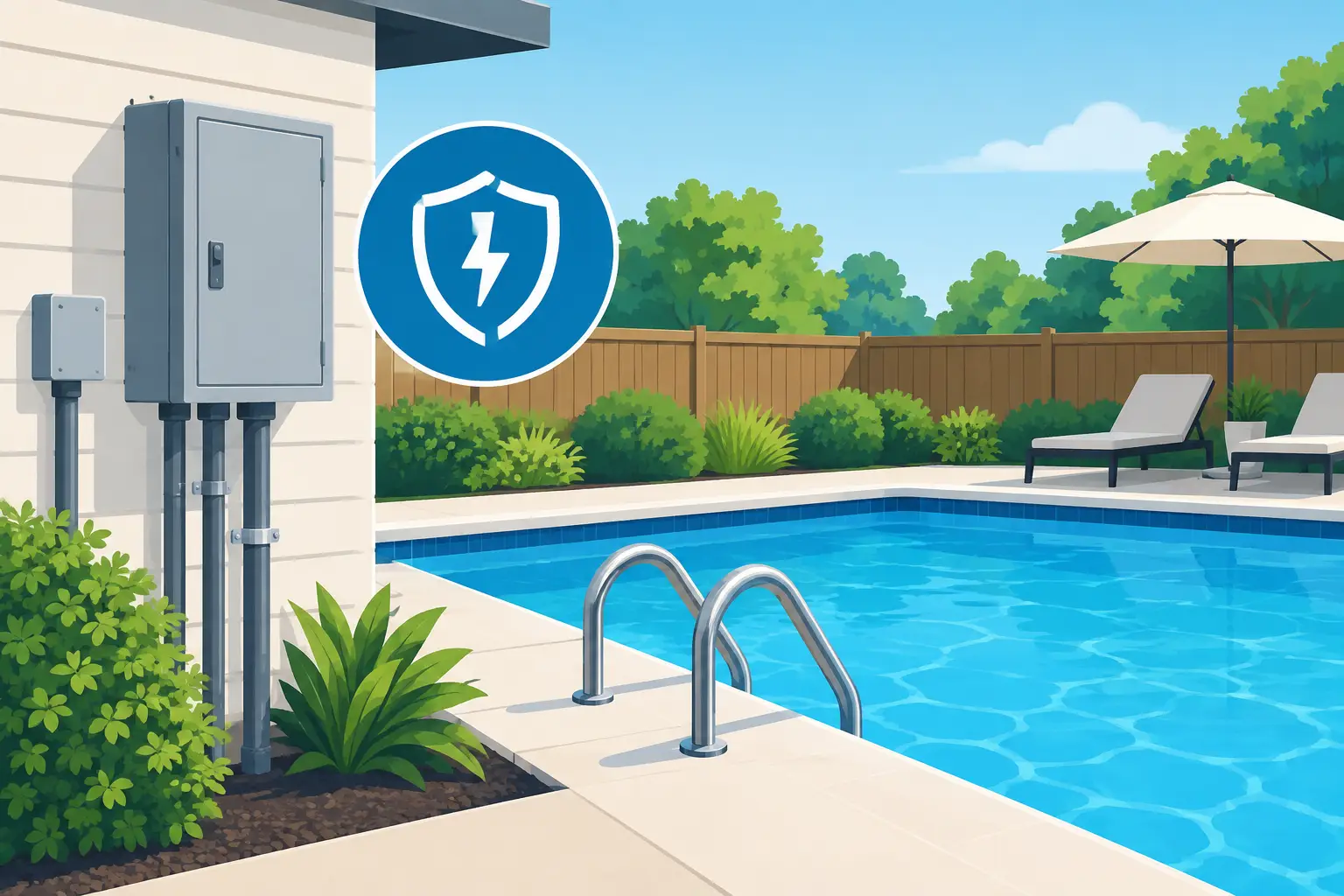
A pool should feel like the easiest part of the backyard: cool water, a quiet evening, kids playing within sight of the patio. Pool electrical safety is what keeps that experience relaxed. Electricity powers the pump, lights, heater, automation, and more, but water turns a minor wiring issue into a serious hazard quickly.
Most homeowners do not need to understand every wire at the equipment pad. They do need to know what belongs to a qualified pool electrician, what warning signs require immediate action, and how to keep upgrades from creating new risks. Safe equipment is not an optional extra. It protects the people using the pool and the investment built around it.
Why Pool Electrical Safety Deserves Attention
Pool equipment operates outdoors, often through heat, rain, humidity, salt air, landscaping runoff, and changing ground conditions. Connections that looked fine at installation can corrode, loosen, or become damaged over time. A replacement light, a new heater, or a patio renovation can also affect electrical systems that were properly installed years earlier.
The most significant concern is electric shock drowning. This occurs when a fault sends electricity into the water or nearby wet surfaces, potentially causing a swimmer to lose muscle control. The risk is not always visible. Clear water and working equipment do not prove that the electrical system is safe.
That is why the protective parts of a pool electrical system matter so much. Ground-fault circuit interrupters, commonly called GFCIs, shut off power when they detect an imbalance that can indicate current traveling where it should not. Proper bonding connects metal components so they remain at the same electrical potential, reducing the chance of a dangerous voltage difference. Grounding provides a path for fault current back to the electrical source. These terms are related, but they are not interchangeable.
A pool should have all three working together, along with equipment installed to applicable electrical codes. Requirements can vary by location and by the age and type of pool, so a qualified local professional should evaluate the specific installation rather than relying on a general checklist alone.
The Equipment Area Is Not a DIY Zone
The pump, filter, heater, salt system, controls, and lighting transformer may sit behind a fence or at the edge of the yard, but this is the electrical center of the pool. It deserves a dry, organized, accessible setup.
Homeowners can keep the area clear of stored chemicals, leaves, mulch, and standing water. They can also notice obvious changes, such as a breaker that trips repeatedly, a pump that hums without starting, damaged conduit, or a control panel with moisture inside it. Beyond that, repairs should be left to a licensed electrician or a pool professional working with one.
Repeated breaker trips are not a nuisance to work around. Do not keep resetting a breaker until it holds. A trip can point to a failing motor, wet wiring, a damaged cable, or another fault that needs diagnosis. The same rule applies to a GFCI that will not reset or trips without a clear reason.
Extension cords should not supply pool pumps, heaters, lights, or permanent outdoor equipment. A cord stretched across a deck or lawn creates both a trip hazard and an electrical hazard, especially after rain or around wet feet. If a piece of equipment needs power, it needs the correct permanent circuit and weather-rated installation.
Keep outlets and covers weather-ready
Outdoor receptacles near the pool should be GFCI-protected and fitted with appropriate weather-resistant covers. A cover matters even when nothing is plugged in. Water, insects, dirt, and corrosion can all affect a receptacle over time.
Avoid using outdoor outlets near the water for casual charging, speakers, or decorative lighting unless the equipment is specifically rated for outdoor use and positioned well away from the pool. A polished backyard does not need cords crossing the deck to feel complete. Permanent lighting and entertainment features are safer when they are planned into the space from the start.
Warning Signs That Mean Stop Swimming
A safety issue may be subtle, so pay attention to anything that feels unusual around the water, equipment, or metal fixtures. If anyone experiences a tingling sensation in the pool, on a ladder, near a light, or while touching metal equipment, get everyone out of the water immediately. Keep people away from the pool and do not reenter until a qualified electrician has inspected the system.
Other warning signs deserve the same caution. These include a light that flickers, a buzzing sound from a fixture or panel, visible corrosion at electrical connections, damaged cords or conduit, burned smells, or a breaker that trips after rain. Do not touch a suspected faulty light or try to inspect a wet electrical box yourself.
If there is an active emergency or someone may have been shocked, call emergency services first. Do not enter the water to assist if you suspect electricity is involved until power has been disconnected safely. A rescue can become a second emergency when the source of the current remains active.
Pool Electrical Safety During Renovations
Renovations are an ideal time to review electrical safety because the deck, coping, lights, and equipment may already be accessible. Replastering, adding a spa, replacing a light, installing a heat pump, or expanding the patio can change the demands on the system.
For example, modern LED pool lights often use less energy than older fixtures, but they still need compatible, correctly installed components. A new variable-speed pump may improve efficiency, yet it needs a suitable circuit and proper control integration. Adding landscape lighting, an outdoor kitchen, or a motorized shade structure can increase the need for thoughtful load planning at the main panel.
Older pools may not meet current standards in every respect, and not every project requires rebuilding the entire electrical system. The right approach depends on the existing installation, local requirements, the scope of work, and the condition of the equipment. What should never be compromised is the evaluation itself. Before construction begins, have the electrical side reviewed as part of the project plan, not after the deck is closed and the finishes are complete.
Coastal Cove Pools treats the equipment plan as part of the backyard experience, because reliable systems make ownership simpler long after installation day.
A Simple Homeowner Inspection Routine
A visual check once each season, and after a major storm, can help catch problems before they interrupt pool time. You are looking for changes, not attempting electrical repairs.
- Check that the equipment area is dry, clear, and free of damaged conduit or exposed wiring.
- Look for cracked outlet covers, corrosion around panels, or water collecting near electrical equipment.
- Notice whether pumps, lights, and automation operate normally without flickering, buzzing, or repeated breaker trips.
- Test GFCI devices only according to the manufacturer instructions, and arrange service if a device will not trip or reset properly.
- Confirm that pool lights, heaters, pumps, and timers are controlled from their intended switches and panels, not temporary cords or improvised connections.
Pool owners should also keep equipment service records. Notes about a recurring breaker trip, a recent lightning storm, a replaced light, or a pump motor repair can help a technician diagnose an issue faster. This is especially useful when purchasing a home with an existing pool, where installation details may not be obvious.
Choose the Right Professional for the Job
Pool service and electrical work overlap, but they are not always the same service. Water chemistry, cleaning, and mechanical maintenance are essential to ownership, while wiring, bonding, grounding, panels, and circuit changes require electrical expertise. For work involving electrical components, ask who will perform the work, whether permits or inspections apply, and how the installation will be tested before the pool returns to use.
A good professional will not dismiss questions about GFCI protection, bonding, or equipment placement as unnecessary details. They should explain the scope in plain language and identify what is being repaired, replaced, or brought up to current requirements. That clarity is valuable whether the job is a single pool light or a full backyard renovation.
Your pool is built for unhurried afternoons and easy gatherings. If something electrical looks, sounds, or feels wrong, pause the fun and make the call. The best pool day is the one everyone enjoys without having to think twice about what is running behind the scenes.