A pool should feel like part of your home, not a stage for the neighbors. Good pool privacy gives your family room to swim, lounge, host friends, and enjoy a quiet evening outside without making the yard feel boxed in.
The best approach is rarely one tall fence placed around the entire perimeter. Privacy works better when it is planned in layers: a clear property boundary, thoughtful screening at the places people actually sit, and landscape features that soften the view. The goal is a backyard that feels protected while staying open, bright, and easy to enjoy.
Start With the Views That Matter
Before choosing a fence, hedge, or screen, stand where people will spend time. Sit on the tanning ledge. Look out from the outdoor dining table. Stand at the grill, at the patio doors, and along the pool edge. Notice where sightlines enter the yard.
This simple exercise often changes the plan. A neighboring second-story window may matter more than a side-yard fence. A house behind the property may only be visible from one corner of the pool. If the main issue is a direct view of the lounge area, screening that area can be more effective and less expensive than trying to cover every inch of the property line.
Also consider the view from inside your home. Privacy features should not turn a beautiful pool into a wall you see through the kitchen window. A well-designed solution protects the spaces that need it while preserving the sense of depth and connection across the yard.
Pool Privacy Starts With the Right Boundary
A fence is usually the foundation of pool privacy, but it has to meet more than one need. It may need to satisfy local pool-safety rules, fit HOA requirements, handle coastal weather, and complement the architecture of the home. Height, gate hardware, spacing, and climbability can all affect compliance, so this is not a detail to treat casually.
Solid wood fencing offers immediate coverage and a warm, residential look. It can be painted or stained to suit the home, although it needs routine care in humid, rainy, or salt-air environments. Vinyl can provide a clean, low-maintenance barrier, while aluminum is often chosen for safety fencing because it feels lighter visually. Aluminum alone provides little visual screening, but it can work well when paired with planting.
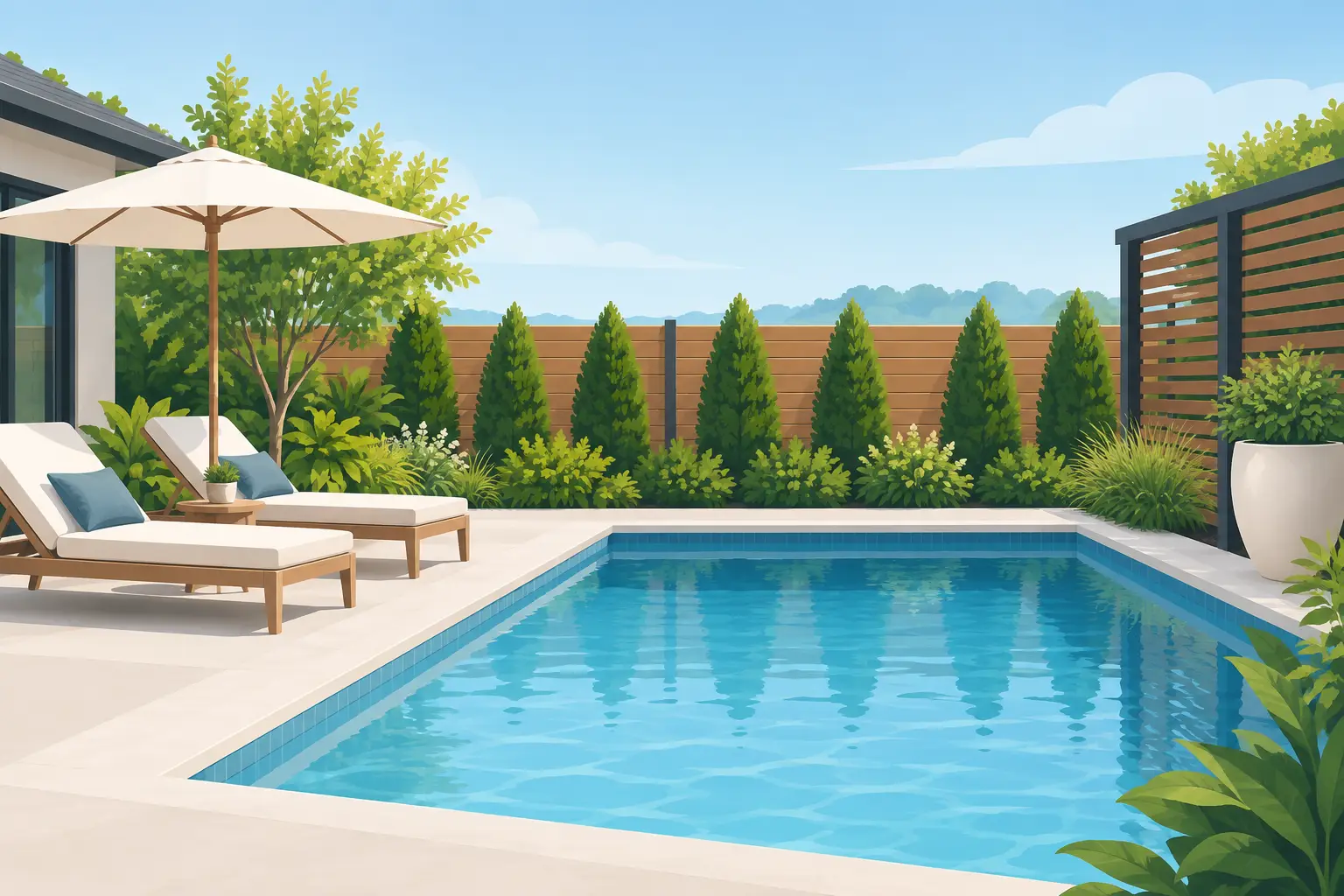
Horizontal boards, slatted panels, and decorative screens can create a more tailored look. They are especially useful around a seating zone, equipment area, or outdoor shower. Keep in mind that a partially open screen provides filtered privacy, not full concealment. At night, interior lights from a neighboring home can make gaps more noticeable than they are during the day.
A perimeter fence does not have to do all the work. In many yards, a lower-visual-impact safety barrier combined with planting and targeted architectural screening produces a more polished result than a single, imposing wall.
Use Planting to Make Privacy Feel Natural
Living screens bring softness to a pool setting. They can block unwanted views, reduce the stark look of a fence, and give the backyard the layered feel of a private resort. But plants require a realistic plan for mature size, roots, watering, cleanup, and long-term maintenance.
Evergreen hedges are a common choice because they offer coverage year-round. Clumping bamboo can create a fast, tropical-looking screen in the right setting, but it should be selected and contained carefully. Running bamboo can spread aggressively and create an expensive problem. Palms, podocarpus, viburnum, clumping ornamental grasses, and native evergreen options may be better choices depending on your climate and soil.
Avoid planting large trees too close to the pool just for immediate height. Their root systems, falling leaves, flowers, seed pods, and shade can add work for years. A beautiful tree that drops debris into the water every day is not a practical privacy solution.
Layering creates a fuller effect without relying on one row of identical plants. For example, taller screening plants can sit along the rear boundary, with mid-height shrubs and lower ornamental grasses closer to the patio. This gives the yard texture and reduces the flat, hedge-wall appearance.
New planting will not provide complete coverage on day one. Larger material gives faster results but costs more and still needs establishment care. Smaller plants are more budget-friendly but require patience. It depends on whether immediate privacy or long-term landscape growth is the priority.
Keep Equipment Access in Mind
Privacy planting should never block access to pool equipment, valves, heaters, or electrical components. Service technicians need room to work, and equipment needs proper airflow. Dense shrubs pushed against a heat pump or heater can lead to performance issues and make routine service more difficult.
A screened equipment area is often worthwhile, but leave enough clearance for maintenance and replacement. The screen should hide the equipment from the patio without making it inaccessible.
Create Private Zones Instead of Hiding the Whole Yard
The strongest designs focus privacy where it improves daily use. A pool deck may be open toward a pleasant view, while the chaise lounge area gets a slatted screen, tall planters, or a planted side border. An outdoor dining area might sit beneath a pergola with drapery or side panels that can be adjusted when guests are over.
This zoned approach makes a backyard feel intentional. It also gives each space a purpose: swimming, sunning, dining, conversation, or a quiet morning coffee. Rather than closing in the entire pool, you create protected moments within a more open landscape.
Tall planters are useful when a fixed structure is not practical. They can define a lounge area, break up a direct sightline, and add color near the water. Choose substantial planters that will not tip in wind, and use plants suited to the heat reflected from hardscape. Small containers with undersized plants rarely provide meaningful screening.
Shade structures can help as well. A pergola, cabana, or covered patio does more than provide relief from the sun. Its roofline changes overhead views from nearby windows and makes the seating area feel more contained. Side curtains or adjustable louvers offer flexibility, though fabric needs cleaning and storage considerations in storm-prone areas.
Do Not Forget Nighttime Privacy
A backyard can feel completely private during the day and exposed after dark. Pool lights, landscape lighting, and indoor lights make people visible in ways that are easy to overlook during planning.
Use lighting to create atmosphere within the space rather than blasting every corner of the yard. Low path lights, carefully aimed uplights, and warm illumination around seating areas keep the pool usable without turning the patio into a spotlight. Shield fixtures so they do not shine toward neighbors or reflect harshly off the water.
If a neighbor can see directly into a lit entertaining area, add a screen, planting, or a shifted seating layout before assuming more lighting is the answer. Privacy and lighting should be designed together.
Balance Privacy With Air, Sun, and Maintenance
More screening is not always better. Tall solid barriers can limit breezes, create shade that changes water temperature, and trap humidity around the deck. Dense landscaping can add leaf load to the pool and reduce visibility around the yard. In a coastal setting, airflow may be one of the reasons the backyard feels so good in the first place.
A thoughtful plan considers the pool’s orientation, prevailing winds, afternoon sun, drainage, and the view from neighboring properties. It also accounts for how the space will look after several growing seasons, not just immediately after installation.
For homeowners planning a new pool or major renovation, privacy decisions belong early in the process. Coordinating fence lines, drainage, decking, planting beds, utilities, and equipment placement avoids the costly feeling of adding privacy as an afterthought. Coastal Cove Pools can help homeowners think through how the pool, hardscape, and surrounding outdoor areas will work as one space.
The most successful private backyards do not feel hidden. They feel comfortable enough that you stop thinking about who might be looking and start using the pool the way you planned to.