
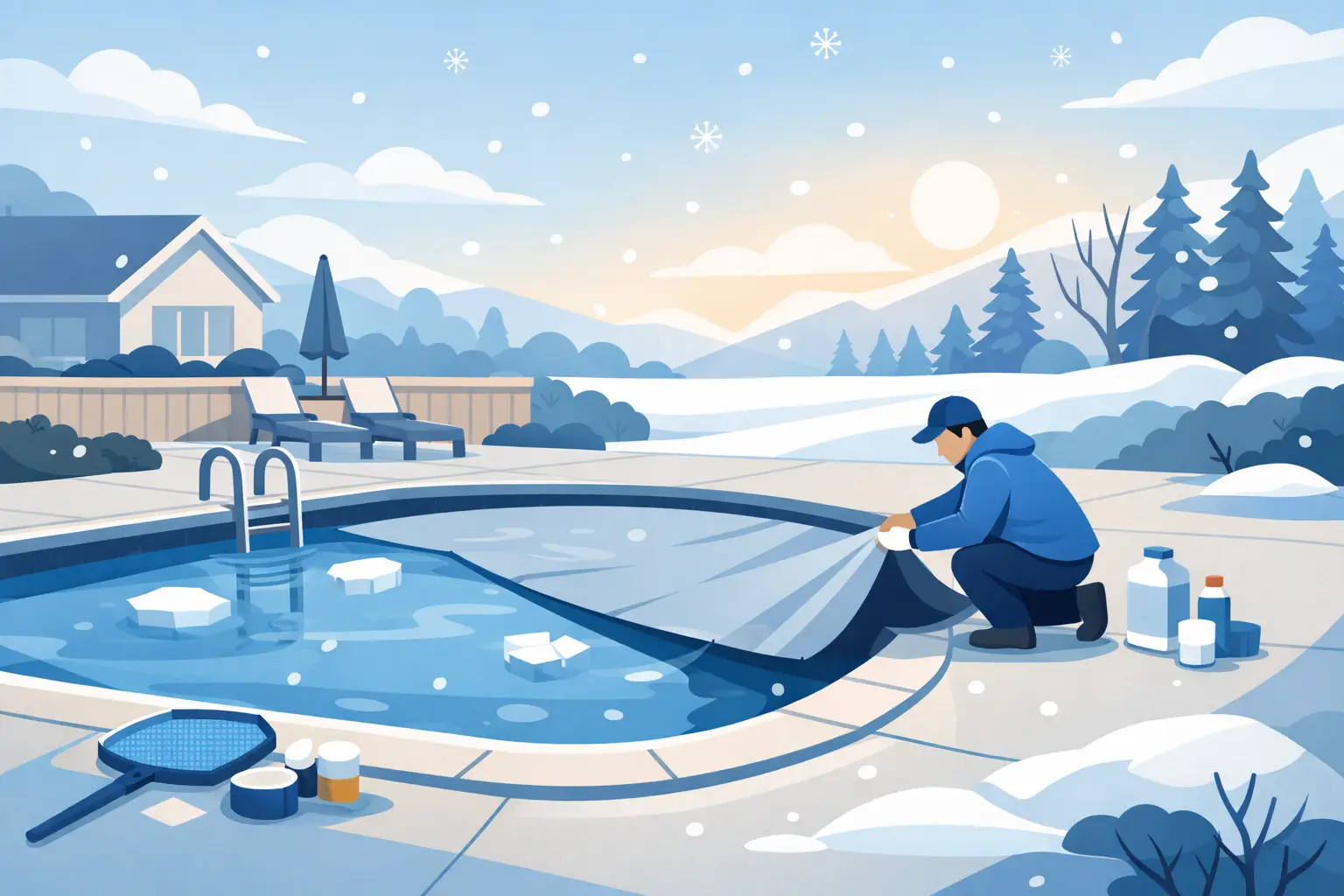
The first hard freeze does not wait for your schedule. If you have been putting off how to close pool for winter, this is the point where a simple seasonal task can turn into stained surfaces, cracked plumbing, or a swampy opening in spring.
A proper pool closing is less about shutting everything down and more about protecting what you have already invested in. For most homeowners, that means balancing water, cleaning thoroughly, lowering the water level if needed, winterizing the plumbing, and securing the cover so the pool stays stable through cold weather. Done right, winter closing keeps spring simple. Done halfway, it tends to create expensive surprises.
When to close a pool for winter
Timing matters more than many people realize. Close too early, while the water is still warm, and you give algae time to grow under the cover. Close too late, and you risk freeze damage if temperatures drop fast.
A good rule is to wait until the water temperature stays consistently below 65 degrees. In many parts of the US, that lands somewhere between late September and early November, depending on climate. If you are in a milder region, you may close later. If you are in an area with early freezes, you may need to move faster.
What matters is consistency, not one cool weekend. A single chilly night is not your signal. Steadily cold water is.
How to close pool for winter without creating spring problems
The cleanest winter openings usually start with the most careful fall closings. That begins a few days before you plan to cover the pool.
Start by skimming leaves, brushing the walls and floor, and vacuuming debris. If dirt or organic material stays in the pool all winter, it can stain surfaces and feed algae. This step is not glamorous, but it is one of the biggest differences between a clean spring opening and a frustrating one.
Next, test and balance the water. Your exact target ranges can vary slightly by pool type and surface, but in general you want pH, alkalinity, calcium hardness, and sanitizer all in a healthy range before closing. If your water is already off balance in the fall, those issues do not improve under a cover. They usually get worse.
Many homeowners also shock the pool before closing. That can help burn off contaminants and leave the water in better shape for the off-season. If you use a winter chemical kit or algaecide, follow the product directions carefully and allow enough circulation time before shutting the system down. More chemical is not always better. Overdoing it can create its own water-quality issues.
Lowering the water level – only when your pool needs it
One of the most common mistakes is lowering the water too much. Not every pool needs the same approach.
If you have a mesh safety cover, the water level often stays relatively close to normal, though it may be lowered slightly based on the cover design and local winter conditions. If you use a solid cover, you may need to lower the water below the skimmer or return lines. Vinyl liner pools need extra care here, because draining too far can put unnecessary stress on the liner.
This is where generic advice gets homeowners into trouble. The right water level depends on your pool structure, cover type, and plumbing layout. If you are not sure, guessing is risky.
Winterizing the plumbing and equipment
This is the part that protects your pool from freeze damage, and it is the part people most often underestimate.
Water left in the lines can freeze, expand, and crack plumbing or equipment. To avoid that, pool lines are typically blown out with air, then sealed with winter plugs. In many systems, antifreeze made specifically for pools may also be added to certain lines for extra protection, depending on the climate and setup.
The skimmer usually needs attention as well. Some pools use a skimmer gizmo or similar freeze-protection device to reduce pressure if ice forms. Pumps, filters, heaters, chlorinators, and other equipment should be drained according to manufacturer guidance. Drain plugs removed from the system should be stored somewhere obvious, because they tend to disappear by spring.
If your pool has water features, attached spas, booster pumps, automation, or a salt system, winterizing becomes more involved. Those extras add comfort in season, but they also add more points that need to be protected when temperatures drop.
For many homeowners, this is the point where professional service makes sense. Cleaning and balancing are manageable for a lot of people. Fully winterizing lines and equipment is less forgiving.
Covering the pool the right way
A winter cover is not just a lid. It is your barrier against debris, light exposure, and shifting winter conditions.
If you have a safety cover, make sure the anchors, straps, and springs are secure and evenly tensioned. The cover should sit tight and clean, without sagging areas that collect debris. If you use a solid winter cover, it needs to be fastened properly and checked for wear before installation. Water bags or other securing systems should be intact and placed correctly.
A damaged or poorly fitted cover creates problems slowly. Debris gets in. Water chemistry drifts. The cover shifts in wind. By the time you notice, the fix is usually bigger than it would have been in the fall.
Throughout winter, it helps to check the cover periodically, especially after storms. You are not reopening the pool. You are just making sure the protection is still doing its job.
Common mistakes homeowners make when they close for winter
Most winter pool damage does not come from one dramatic failure. It comes from small misses.
Closing too early is a big one. Warm water under a cover is an open invitation for algae. Skipping a full cleaning is another. Leaves and debris do not become less of a problem just because they are out of sight.
Poor water balance is also common. Some homeowners add closing chemicals without testing first, which can leave the water too aggressive or too scale-forming. Others drain the pool too far, especially in vinyl liner pools. And many simply do not get all the water out of the plumbing, which is the classic setup for freeze damage.
Another issue is assuming all pools close the same way. A gunite pool with a safety cover in a cold inland climate does not follow the same exact process as a vinyl pool in a milder coastal area. The general steps are similar. The details are not.
DIY or professional pool closing?
It depends on your setup, your experience, and your tolerance for risk.
If you have a simple pool system, understand your chemistry, and know how to winterize lines properly, a DIY close can be reasonable. If you are newer to pool ownership, have more advanced equipment, or live where hard freezes are common, professional closing can be the cheaper decision in the long run.
That trade-off matters. A service visit costs money now. Plumbing repairs, liner damage, or equipment replacement cost more later.
For homeowners who see the pool as part of a polished outdoor space, not another weekend project, professional closing also saves time and removes guesswork. That has value of its own.
A practical checklist for how to close pool for winter
Before winter settles in, make sure the pool is fully cleaned, the water is balanced, the sanitizer level is appropriate, and any closing chemicals have circulated. Lower the water only as much as your pool and cover require. Blow out and plug the lines, drain the equipment, protect the skimmer, and secure the cover so it stays in place through wind and weather.
That is the process in plain terms. The details are where quality shows.
A well-closed pool sits quietly all winter and opens with fewer surprises. If anything about your system feels unclear, it is better to ask questions in the fall than deal with damage in the spring. Coastal Cove Pools approaches winter the same way homeowners should – protect the experience now, so it is ready when warm weather comes back.
When you close your pool with care, you are not just ending the season. You are setting up the next one.