
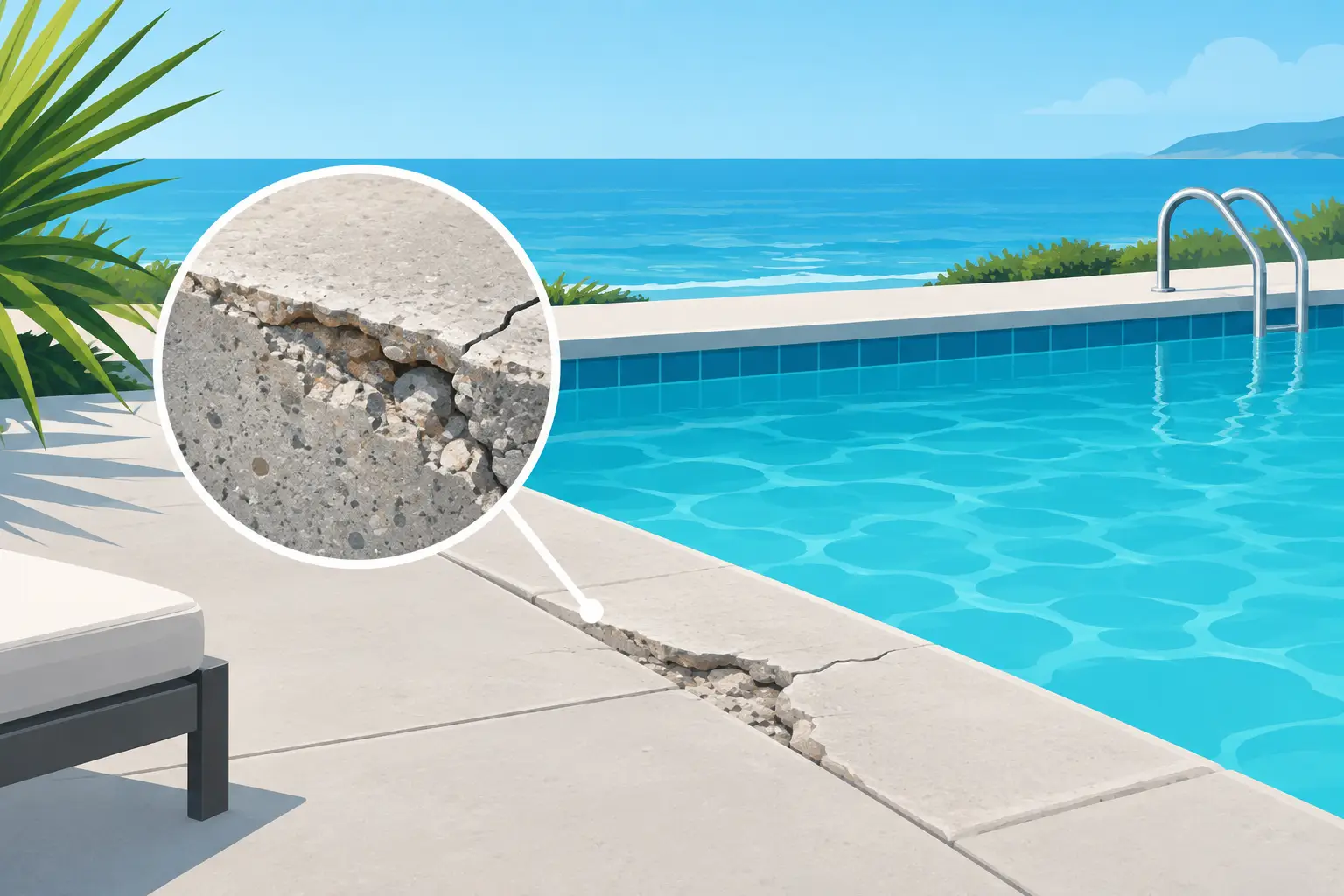
A saltwater pool should feel easy: clear water, comfortable swimming, and more time in the backyard. But homeowners often ask, does saltwater damage concrete around a pool? The honest answer is that it can contribute to damage, especially over time, but a well-built and properly maintained pool deck is not automatically at risk just because the pool uses salt.
The difference comes down to concentration, exposure, materials, drainage, and care. Saltwater pool systems use far less salt than ocean water, yet repeated splash-out and evaporation can still leave salt crystals behind. Those crystals can affect concrete, coping, metal fixtures, and nearby finishes when small issues are allowed to build.
Does Saltwater Damage Concrete? It Depends on Exposure
Saltwater pools typically operate at roughly 3,000 to 4,000 parts per million of salt. By comparison, ocean water contains about 35,000 parts per million. That makes pool water far less aggressive than seawater, but it does not make it harmless to every surface around the pool.
Concrete is durable, porous, and generally well suited to a pool environment. A quality concrete deck with the right finish, drainage, control joints, and sealer can serve a saltwater pool beautifully for years. Problems are more likely when water regularly dries on the surface, when the deck has existing cracks, or when poor drainage keeps salt-bearing water in contact with the concrete.
The salt itself is usually not the whole story. As water evaporates, salt remains behind. In areas with frequent splash-out, such as steps, tanning ledges, handrail locations, and the deck beside the shallow end, those deposits may work into pores and small cracks. Moisture moves through concrete, then evaporates again, leaving more salt behind. Over many cycles, that process can contribute to surface wear.
Freeze-thaw climates need extra attention. Water that enters concrete can expand when it freezes, widening cracks and loosening the surface. Salt deposits can add to the stress. In warm coastal regions, freeze-thaw damage may not be a concern, but salt residue and constant moisture still deserve routine care.
What Saltwater Damage to Concrete Can Look Like
Early signs are often subtle. A white, powdery film called efflorescence can appear on concrete, coping, grout, or stone. It is not always caused by pool salt alone, but it signals that moisture and minerals are moving through the material.
You may also notice small pits, flaking, scaling, rough patches, or discoloration. These conditions do not necessarily mean the deck is failing. Concrete can develop cosmetic changes from weather, improper finishing, harsh cleaners, deicing chemicals, and normal age. Still, near a saltwater pool, it is smart to address new surface changes before they become deeper repairs.
Saltwater can be especially tough on exposed metal. Handrails, anchors, screws, light rings, and other hardware may corrode if they are not designed for pool use or if salt deposits sit on them. Nearby natural stone and some porous pavers can also show staining or deterioration sooner than dense, properly sealed materials.
That is why material selection matters before construction begins. A pool is a connected outdoor system, not a shell of water surrounded by separate finishes. The deck, coping, drainage, equipment, and water chemistry all need to work together.
The Biggest Risk Is Poor Water Management
A saltwater chlorine generator turns dissolved salt into chlorine. It does not eliminate the need to test and balance the water. In fact, proper chemistry protects more than swimmers. It helps protect pool finishes, equipment, and the surfaces around the waterline.
High salt levels can increase the chance of residue and corrosion. Low calcium hardness, poor pH control, or unstable alkalinity can make water more aggressive to cement-based surfaces and grout. A system that runs longer than necessary or produces too much chlorine can also push water chemistry out of balance.
Splash-out deserves practical attention, too. Kids jumping in, pool games, and entertaining are part of owning a backyard pool. The goal is not to stop the fun. It is to rinse and clean areas where water collects, particularly after a busy weekend or a pool party.
Drainage is equally important. Pool decks should slope so water moves away from the pool structure and does not pond near coping, expansion joints, or the home. Standing water gives salt and minerals more time to settle into the surface. It can also make the deck slippery and expose weak spots in the finish.
How to Protect Concrete Around a Saltwater Pool
The most effective protection starts with good construction and continues with low-effort, consistent maintenance. A professionally installed deck should have the right concrete mix, reinforcement where needed, properly placed joints, and a finish appropriate for wet feet. If the deck includes decorative concrete, natural stone, pavers, or tile, each surface should receive the care recommended for that specific material.
A breathable, pool-appropriate sealer can help limit water and salt absorption. Not every sealer is right for every deck, and some products can alter color, create sheen, or reduce traction. Around a pool, a product must protect the surface without leaving it slick. Resealing schedules vary by product, weather, traffic, and surface condition, so there is no one calendar date that fits every backyard.
For ongoing care, keep the routine simple:
- Maintain salt, pH, alkalinity, calcium hardness, and sanitizer levels within the recommended range for your pool system.
- Rinse heavy splash zones with fresh water, especially during hot, dry weather when evaporation leaves deposits quickly.
- Sweep away debris and clean spills before they sit on the deck.
- Watch for pooling water, new cracks, flaking, or white mineral deposits.
- Avoid harsh acid washing, abrasive tools, and deicing salts unless a qualified professional confirms they are safe for your finish.
These small habits protect appearance as much as structure. A clean deck also makes a backyard feel more finished, whether it is a quiet morning swim or a full patio gathering.
Repair Small Issues Before They Spread
Hairline cracks are common in concrete and are not always a structural concern. However, cracks around a pool deserve a closer look if they widen, shift, trap water, or run alongside coping. Water entering an open crack can carry minerals deeper into the slab, and movement can affect adjacent tile or stone.
Surface scaling and spalling should also be evaluated promptly. The repair may be as simple as cleaning, patching, and resealing. More extensive damage can require resurfacing or correcting a drainage issue first. Covering up the visible problem without fixing the cause usually leads to another repair later.
If you are building a new pool, discuss saltwater compatibility before choosing decking and coping. If you already own a saltwater pool, periodic inspection is enough to catch most concerns early. There is no need to fear a salt system or give up the softer, more comfortable swim experience many homeowners prefer.
A saltwater pool and a concrete deck can coexist exceptionally well when they are designed as one outdoor space and cared for with consistency. Coastal Cove Pools believes the best pool ownership feels simple: water that is balanced, surfaces that stay inviting, and a backyard ready whenever you are.