
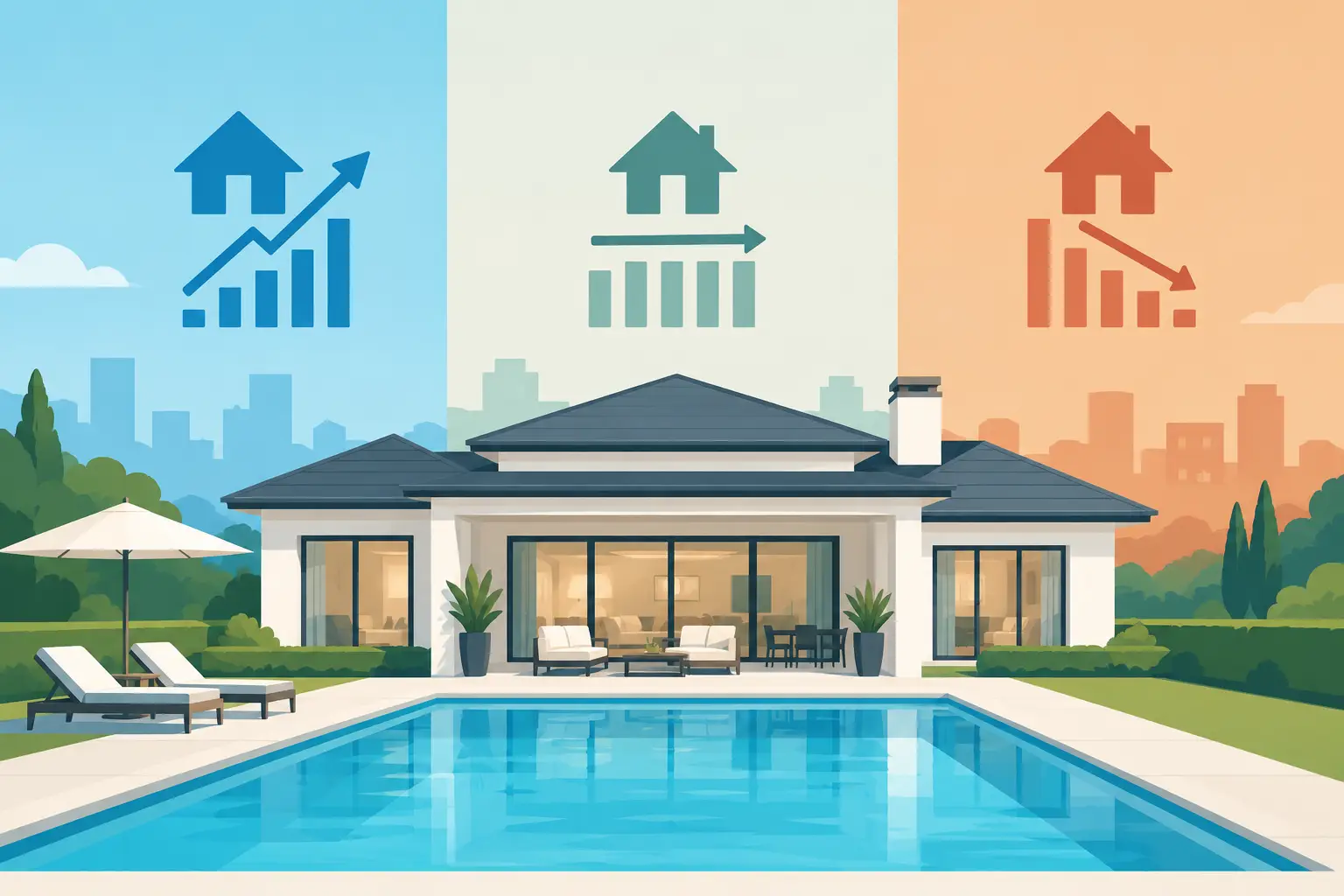
A pool can be the feature that makes a buyer stop scrolling, book a showing, and picture weekends at home. But pool home value is not a fixed number or a simple percentage of the installation cost. It changes with the neighborhood, climate, pool design, condition, and the expectations of buyers in your area.
For many homeowners, the better question is not, “Will I get every dollar back?” It is, “Will this pool make my home more appealing to the right buyer while improving the way we live here?” In a pool-friendly market, a well-planned backyard can do both. In the wrong setting, or with deferred maintenance, it can become a negotiation point instead.
What Determines Pool Home Value?
A pool is part real estate feature and part lifestyle feature. An appraiser may recognize measurable added value, but buyers often respond to the complete experience: the water, the patio, the privacy, the view from inside the home, and whether the space feels easy to own.
Location comes first. In warm-weather regions where outdoor living is part of everyday life, buyers may see a pool as an expected amenity, particularly in higher-priced neighborhoods. In markets with long swimming seasons, a home without a pool may compete against many homes that already have one. There, a pool can help preserve competitiveness and shorten the gap between what buyers want and what the home offers.
In cooler climates, a pool can still appeal strongly to the right household, but the buyer pool may be smaller. Families may love it. Buyers who travel often, dislike maintenance, or want a low-commitment yard may not. That does not mean a pool has no value. It means the home needs to be priced and presented for the audience most likely to appreciate it.
Neighborhood norms matter just as much. A modest pool can feel out of place in a neighborhood of small yards and simple outdoor spaces. On the other hand, a home positioned among larger properties with established pools, covered patios, and outdoor kitchens may be at a disadvantage without one. The goal is not to copy every neighboring backyard. It is to create an upgrade that fits the home and its surroundings.
A Finished Backyard Carries More Weight
Buyers rarely evaluate a pool in isolation. They evaluate the backyard as a whole.
A pool with adequate decking, thoughtful drainage, clean landscaping, and a comfortable place to sit feels intentional. The same pool surrounded by cracked concrete, exposed equipment, and an unused patch of lawn can look like a project. The water may be the centerpiece, but the setting creates the first impression.
This is why scale matters. A pool should leave room for movement, furniture, and the way people actually use the yard. On a compact lot, an oversized pool can dominate the space and reduce flexibility. On a larger lot, a pool that is too small or disconnected from the home may feel unfinished. Good design considers sightlines from the house, sun exposure, privacy, access, and safety from the beginning.
Features can add appeal when they support the overall design. A tanning ledge can be useful for young children and relaxed lounging. Integrated lighting improves evening use. A spa can broaden seasonal enjoyment in some markets. Water features, fire elements, and outdoor kitchens can create a resort-style setting, but they are not automatic value multipliers. Highly personal choices should be made because you will enjoy them, not because you expect every buyer to pay extra for them.
Condition Can Protect or Reduce Value
A clean, well-kept pool reassures buyers. A pool with uncertain equipment, cloudy water, damaged surfaces, or visible leaks raises questions immediately.
Buyers understand that pool ownership involves care. What they do not want is an unknown repair bill just after closing. Equipment age, automation, heater operation, filter condition, the pool finish, tile, coping, deck condition, and safety features all shape confidence. If a buyer sees signs of neglect, they may lower their offer or move on to a home that feels easier to own.
Maintenance records can help tell a better story. Documentation of regular service, equipment updates, resurfacing, leak repairs, and water-quality care gives a prospective buyer useful context. It turns “What might be wrong?” into “This has been managed responsibly.”
Safety is also part of value. Local rules vary, but secure barriers, self-closing gates, compliant drains, and properly maintained covers or alarms can matter to buyers, inspectors, lenders, and insurers. A safe pool is not only a better ownership experience. It removes avoidable friction during a sale.
The cost buyers can see
A pool does not need to look brand-new to show well. It needs to look cared for. Freshly balanced water, a clean tile line, trimmed landscaping, repaired deck areas, and organized equipment make a meaningful difference because they signal lower perceived risk.
Before listing a pool home, address obvious issues rather than hoping buyers will overlook them. A small equipment repair or professional cleaning can be far less costly than a major concession during negotiations. If a larger update is needed, get clear estimates and decide whether completing the work or pricing accordingly makes more sense for your market.
Appraised Value and Buyer Value Are Not Always the Same
Homeowners often expect a new pool to add the full cost of construction to an appraisal. That is rarely how residential value works. Appraisers look at comparable sales, lot size, location, home condition, and features that can be supported by recent local transactions.
If comparable homes with pools have sold at a premium, the appraised value may reflect that pattern. If there are few relevant sales, the adjustment may be conservative even when buyers are enthusiastic. A lender and an appraiser need evidence. A buyer may simply see the backyard as the reason one home feels worth choosing over another.
That difference is worth understanding before you build. A pool may not return its full installation cost in a future sale, especially after permitting, site preparation, decking, landscaping, and upgrades. Yet it can still be a smart home investment if it improves your daily life and helps the property stand out when the time comes to sell.
Treat resale as one factor, not the only reason to build. The strongest projects balance present enjoyment with choices that remain broadly appealing: durable materials, a proportionate layout, dependable equipment, and a backyard plan that does not depend on a passing trend.
How to Build With Resale in Mind
Start by studying the homes around you. Look at the age and style of nearby pools, the size of outdoor living areas, and the price range of comparable properties. This helps establish what buyers already expect in the area.
Then design for the house, not for a catalog photo. A clean geometric pool may complement a contemporary home. Softer lines may suit a more relaxed landscape. Either can work when the pool feels connected to the architecture and leaves space for the rest of backyard life.
Choose equipment for reliability and usability. Energy-efficient pumps, straightforward controls, good circulation, and accessible equipment placement are practical decisions that owners and future buyers appreciate. Complicated systems are not necessarily a problem, but only if they are well installed, documented, and easy to service.
Avoid spending heavily on features with a very narrow audience unless they are central to your own enjoyment. A dramatic slide, unusual color palette, or highly customized theme may delight one household and limit appeal for another. Classic finishes and flexible outdoor spaces tend to age better.
The Best Return May Be the Years Before You Sell
A pool’s financial return is only one part of its value. For many households, the real return is a place where children spend summer afternoons, friends stay longer after dinner, and a regular Tuesday feels less ordinary. That value does not appear on an appraisal, but it is real.
The right pool should fit your property, your local market, and your willingness to care for it. Coastal Cove Pools approaches that decision as a complete backyard investment, with attention to the build and the ownership that follows. Plan for a pool you will use often, maintain with confidence, and be proud to show when the next buyer walks through the gate.