
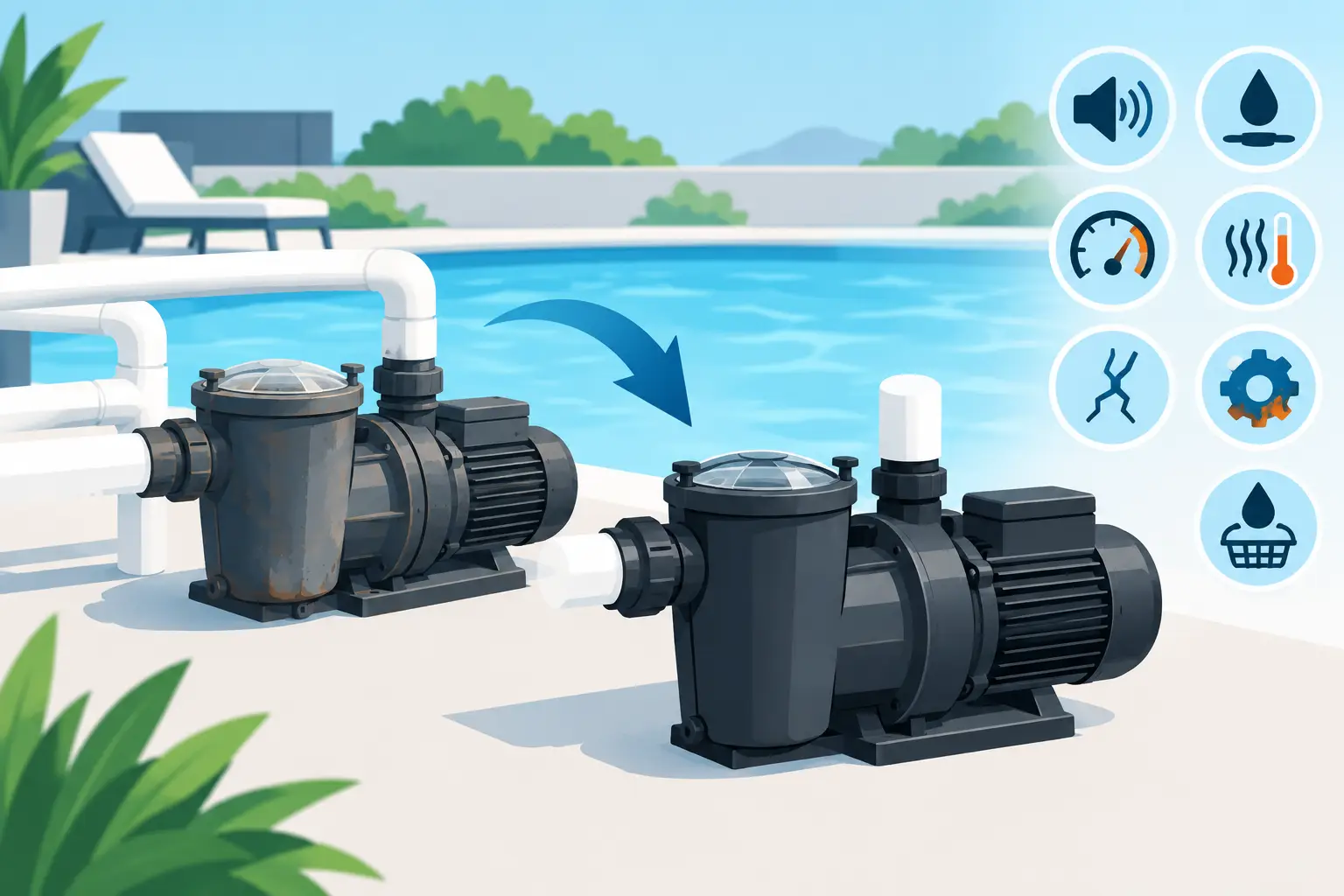
A pool pump rarely fails at a convenient time. It usually starts with a new sound, weaker circulation, or water that suddenly takes more effort to keep clear. Knowing when to replace pool pump equipment can prevent a small mechanical issue from becoming cloudy water, equipment damage, and missed weekends in the backyard.
The pump is the working center of your pool system. It pulls water through the skimmer and main drain, sends it through the filter, and returns clean, treated water to the pool. When it cannot do that job efficiently, every part of pool care becomes harder.
1. The Pump Is Loud Enough to Change the Backyard
A healthy pool pump has a steady operating hum. A loud grinding, shrieking, rattling, or metal-on-metal sound is different. Those sounds can point to worn motor bearings, a failing impeller, loose hardware, or vibration from an unstable pump pad.
Not every noisy pump needs replacement. A loose lid, debris in the pump basket, or a small air leak can create noise and may be repairable. But if the motor bearings are failing, the repair can be short-lived or costly, especially on an older single-speed unit. When a pump makes outdoor time less relaxing, it deserves prompt attention.
2. It Loses Prime or Pulls in Air
A pump that repeatedly loses prime cannot circulate water properly. You may see air in the pump basket, bubbles coming from the return jets, or a water level in the pump housing that drops while it runs.
Sometimes the answer is simple: low pool water, a worn pump lid O-ring, a loose drain plug, or a suction-side leak. These should be checked before replacing equipment. If those items are in good condition and the pump still struggles to prime, a cracked housing, worn seal, or declining motor performance may be involved.
Air leaks should not be ignored. Poor circulation can leave sanitizer unevenly distributed, place stress on the pump, and make it difficult to keep the water inviting.
3. Water Flow Is Weak Even After Basic Service
Weak flow at the return jets is one of the clearest signs of a circulation problem. Before assuming the pump is done, rule out the common causes: clean the skimmer and pump baskets, confirm the water level is high enough, and make sure the filter is clean and the valves are fully open.
A dirty filter can reduce flow dramatically. So can a clogged impeller. In some cases, a pool professional can clear the blockage or replace a damaged impeller without replacing the whole pump.
If flow remains weak after the system has been inspected and serviced, the pump may no longer be producing the performance your pool requires. This is especially noticeable in pools with features such as heaters, spas, waterfalls, cleaners, or salt systems. Those features depend on consistent water movement, not just a motor that happens to turn on.
4. The Motor Overheats, Trips, or Stops Mid-Cycle
A pump that shuts off unexpectedly, trips the breaker, or feels unusually hot needs a professional assessment. Electrical problems are not a homeowner troubleshooting project. They can involve the motor, capacitor, wiring, breaker, timer, or control system.
A hot motor may simply be working too hard because of restricted flow. It can also mean the motor is nearing the end of its service life. Repeated breaker trips are more urgent. Continuing to reset the breaker without finding the cause risks damaging equipment and creates a safety concern.
Turn the system off and arrange service if the pump smells burnt, emits smoke, leaks near electrical connections, or continues to trip power. A clear diagnosis helps distinguish a repairable electrical issue from a pump replacement.
When to Replace Pool Pump Instead of Repairing It
Age changes the decision. Many pool pumps operate for roughly eight to 12 years, although run time, weather exposure, maintenance, water balance, and installation quality all affect that range. A well-maintained pump may last longer. A pump that runs long hours against a dirty filter may not.
Replacement usually makes more sense when an older pump has a failed motor, frequent leaks, persistent bearing noise, or multiple repair needs at once. The cost of a motor replacement can be reasonable in the right situation, but putting major money into an aging, inefficient pump is not always the better value.
Consider the complete picture:
- The pump is near or beyond its expected lifespan.
- Repairs are recurring rather than isolated.
- The pump cannot deliver sufficient flow for the pool and its features.
- Electricity use is high because the unit runs at one fixed speed.
- Replacement parts are hard to find or no longer make financial sense.
A newer variable-speed pump often changes the math. It can run longer at a lower speed, using less energy while maintaining steady filtration. It can also be programmed for different needs, such as normal filtration, water features, vacuuming, or spa operation. The upfront cost is higher than a basic replacement, but the operating savings and quieter performance can make it a strong fit for homeowners who use their pool regularly.
Leaks: Pump Problem or Plumbing Problem?
Water beneath the pump does not automatically mean the pump must be replaced. A leak at the lid, drain plugs, unions, or plumbing connections may be a straightforward repair. A shaft seal leak, often visible between the motor and pump housing, can also be repaired if caught early.
The decision becomes less clear when a leaking pump has a corroded motor, cracked housing, and years of use behind it. Replacing one part may reveal the next weak point. In that case, a new pump can offer greater reliability and a cleaner starting point for the equipment pad.
Do not let a small leak run for weeks. Even a slow leak can damage the motor, waste water, and create a persistent wet area around electrical equipment.
Choose the Right Replacement, Not Just the Same One
A pool pump should be sized for the plumbing, filter, pool volume, and attached features. Bigger is not automatically better. An oversized pump can create excessive flow, strain equipment, increase noise, and waste energy. An undersized pump may not support a heater, cleaner, spa, or water feature as intended.
This is why replacing a pump should begin with an equipment review, not a quick match based only on horsepower. A professional should consider the existing plumbing, voltage, filter capacity, desired run schedule, and whether you plan to add features later. If your old pump struggled from the beginning, installing the same model may repeat the problem.
For many homes, a variable-speed pump is the practical choice. It supports efficient day-to-day filtration and gives the system flexibility when higher flow is needed. Still, the best model depends on your pool’s setup. A simple pool without added features has different requirements than a pool with a spa, automation, and multiple water features.
Protect the New Pump From an Early Failure
Good equipment lasts longer when the rest of the system is cared for. Keep the water level around the middle of the skimmer opening so the pump does not pull air. Empty baskets before debris restricts flow, clean the filter on the appropriate schedule, and address leaks before they become motor damage.
Water chemistry matters, too. Balanced water protects seals, heaters, surfaces, and equipment over time. It also keeps the pool easier to enjoy, which is the point of having it in the first place.
If your pump is getting louder, losing flow, or requiring another repair, do not wait for it to fail on the hottest weekend of the year. A clear equipment assessment gives you time to choose the right solution and keep the backyard ready for the quiet, easy enjoyment it was built for.