
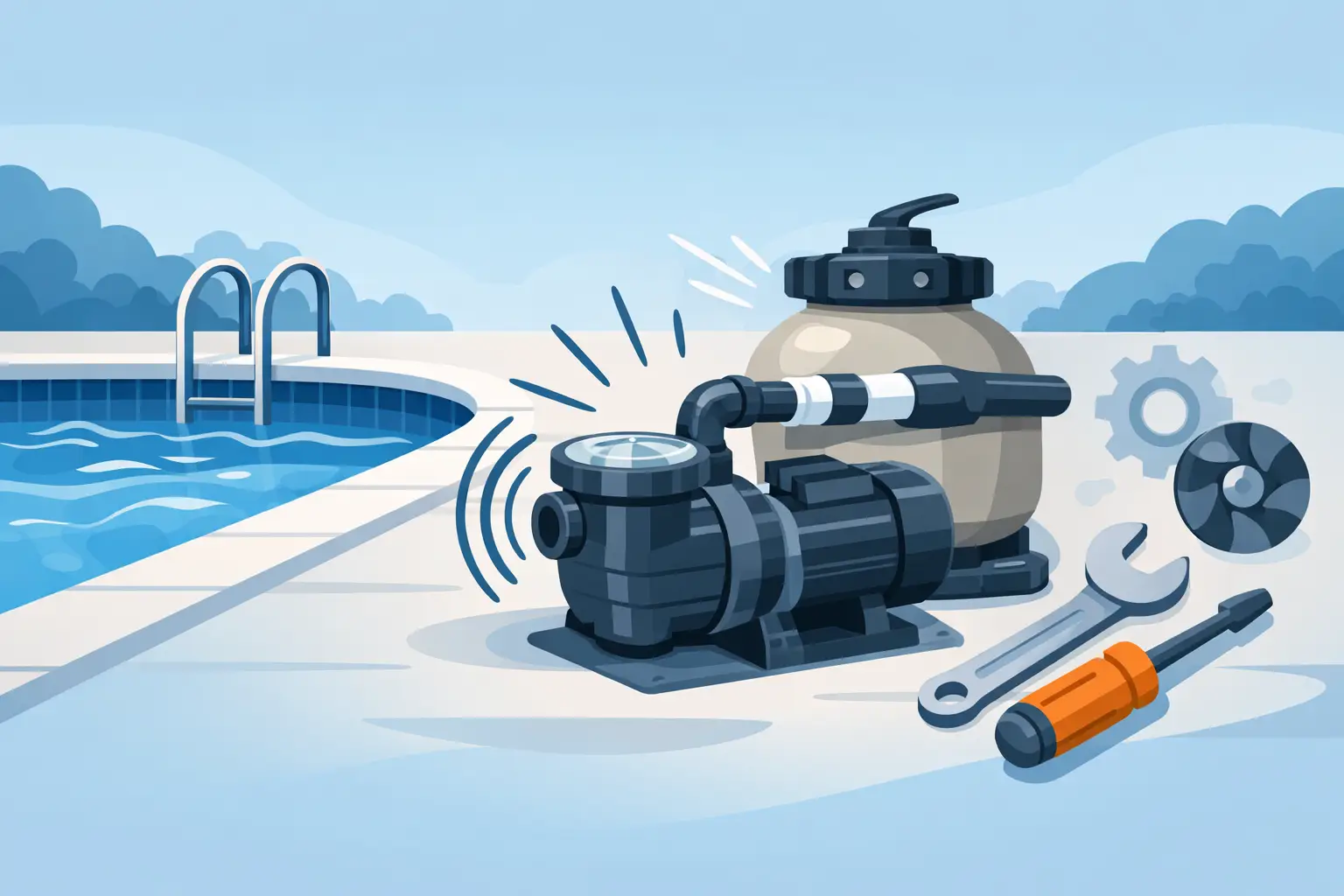
A pool pump should be noticeable, not disruptive. If you are asking, “why is pool pump loud,” the sound itself is often the best clue. A steady, low motor hum is normal. Grinding, screeching, rattling, or a sudden roar is not. Left alone, a noisy pump can turn a small repair into a damaged motor, poor circulation, or an untimely equipment replacement.
The first step is to identify when the noise occurs and what it sounds like. Does it start only at high speed? Does it change after the filter is cleaned? Does the pump get louder as the day goes on? Those details help separate a simple adjustment from a mechanical problem.
Why Is a Pool Pump Loud? Start With the Sound
Pool equipment makes several kinds of noise, and each points in a different direction. Avoid opening the motor or loosening plumbing connections while the system is running. Turn off power at the breaker before inspecting equipment, and call a qualified pool professional if you see leaking water, exposed wiring, or a hot motor.
A grinding or growling sound
A deep grinding, growling, or rough rumble commonly points to worn motor bearings. Bearings support the spinning shaft inside the motor. As they wear, the motor becomes louder and may eventually seize.
This is not a repair to postpone for a season. A pump may continue to run for a while, but the noise usually gets worse. Depending on the age and condition of the equipment, replacing bearings can make sense, or motor or pump replacement may be the more reliable long-term choice.
A high-pitched screech or squeal
A sharp screech often means bearing trouble as well, especially when it begins at startup or grows louder at higher speeds. On some equipment, debris around the fan or a failing internal component may create a similar sound.
Do not assume a squeal will work itself out. Heat and friction are hard on a pool motor. Shut the system down if the pump is unusually hot, smells burnt, trips a breaker, or loses its normal flow.
Rattling, vibrating, or shaking
Rattling may be as simple as a loose pump lid, an unsecured pipe, or equipment sitting unevenly on its pad. It can also come from loose mounting bolts, a cracked base, or a motor that has begun to vibrate excessively.
Walk around the equipment with the pump running and listen without touching moving parts. Check whether vibration is traveling into PVC pipes, a heater cabinet, or a nearby fence. A small rattle can become a much louder backyard nuisance when hard surfaces amplify it.
A loud rushing, slurping, or gravel-like sound
This sound often indicates cavitation or an air leak on the suction side of the system. Cavitation occurs when the pump is not receiving enough water and small vapor bubbles collapse inside it. It can sound like rocks moving through the pump basket or a harsh, hollow growl.
Air can enter through a worn pump lid O-ring, a loose fitting, a low water level, a clogged skimmer, or a blocked suction line. A pump that runs dry or pulls too much air can damage seals and internal components, so address this quickly.
Check the Simple Causes First
Not every loud pool pump needs a replacement. A few basic checks can solve noise caused by restricted water flow or loose equipment.
Start with the pool water level. It should generally sit around the middle of the skimmer opening. If the level is too low, the skimmer can pull in air and make the pump surge or growl. Clear leaves and debris from the skimmer basket, then turn off the pump and empty the pump basket.
Next, inspect the pump lid and O-ring. The lid should be clean, seated evenly, and tightened by hand. A dry, flattened, cracked, or dirty O-ring can allow air into the system. Cleaning it and applying a pool-safe lubricant may restore a proper seal. Replace the O-ring if it is stretched or damaged.
A dirty filter can also make a system work harder than it should. High pressure at the filter, reduced return flow, or a pump that sounds strained after normal run time may point to a filter that needs cleaning. The right service method depends on whether you have a cartridge, sand, or DE filter. Over-cleaning or cleaning incorrectly can create new problems, so follow the equipment manufacturer’s guidance.
Finally, look for obvious vibration issues. Make sure the pump is firmly mounted and that plumbing is adequately supported. If a pipe knocks against the pad, wall, or neighboring equipment, a technician can often secure it without major work.
When the Noise Is Caused by Air or Low Flow
The pump needs a consistent supply of water to operate quietly and efficiently. When that supply is interrupted, the sound can be dramatic even if the motor itself is in good shape.
A clear pump lid is useful here. While the system is running, a small air bubble may be normal, especially on a variable-speed pump at lower speeds. A large, persistent air pocket, swirling water, or repeated loss of prime is not. It suggests the pump is drawing air or struggling to pull water through the line.
Common causes include a loose pump lid, a failing valve, a cracked suction fitting, a clogged skimmer line, or a water level that has dropped below the skimmer. In some cases, the restriction is underground or inside a plumbing line. That is a job for professional testing rather than guesswork.
There is a trade-off with variable-speed pumps as well. Lower speeds are usually quieter and more energy-efficient, but setting the speed too low can reduce skimming, heater flow, or salt system performance. Higher speeds increase circulation for features such as waterfalls, spa jets, and vacuuming, but they naturally create more noise. The goal is not absolute silence. It is the right speed for each task without strain, air intrusion, or excessive vibration.
Equipment Age Matters
Pool pumps operate in heat, humidity, rain, and chemical exposure. Even well-maintained equipment reaches a point where a repair is no longer the smart investment. If a pump is older, loud, leaking at the seal plate, and losing efficiency, a replacement may provide a quieter and more dependable result than repeated repairs.
Modern variable-speed pumps are often noticeably quieter than older single-speed models. They can also reduce energy use because they run longer at lower speeds instead of relying only on a high-speed setting. Still, the pump must be sized and programmed for the pool, plumbing layout, water features, and sanitation equipment. An oversized or poorly configured pump can be louder than it needs to be.
When evaluating replacement, consider the whole equipment pad. Aging valves, undersized plumbing, a restrictive filter, or unsupported pipes can limit the benefit of a new pump. A good assessment looks at how the system works together, not just the noisiest component.
When to Call a Pool Professional
A homeowner can safely handle basic basket cleaning, water-level checks, and a visual inspection of the pump lid. Beyond that, noisy equipment deserves a closer look when the sound is persistent or getting worse.
Schedule service promptly if the pump is grinding, screeching, leaking, losing prime, tripping the breaker, smelling hot, or failing to move water normally. Also call when a loud sound appears immediately after equipment work, filter service, or a change in pump programming. These clues can prevent unnecessary parts replacement and protect the circulation system.
At Coastal Cove Pools, the focus is on keeping the equipment side of pool ownership as dependable as the backyard experience itself. A quiet, properly operating pump helps protect water quality, extends equipment life, and keeps the pool ready for the moments it was built for.
A noisy pump does not always mean a major failure, but it is rarely a sound to ignore. Listen for the pattern, handle the simple checks safely, and act before a rough hum becomes a stopped pump on the first warm weekend you planned to spend outside.