
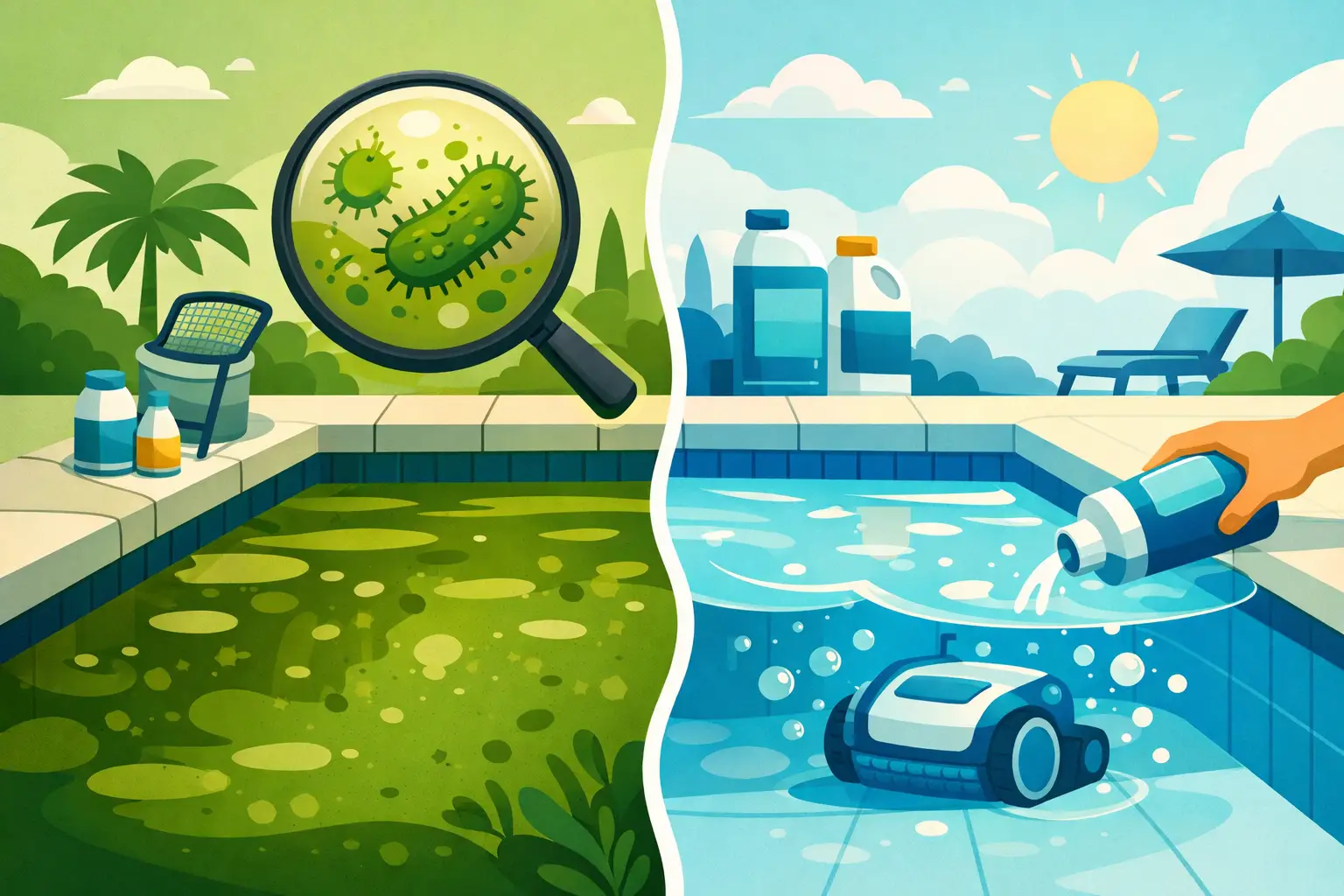
You look outside expecting clear blue water and get a swampy green surprise instead. If you’re asking why is pool water green, the short answer is that something in the water is out of balance – usually algae, metals, or poor sanitizer performance. The right fix depends on which one you’re dealing with, because green water is a symptom, not a single problem.
For homeowners, this matters beyond appearance. Green water can stain surfaces, clog filters, shorten equipment life, and turn a backyard retreat into a weekend project. The faster you identify the cause, the easier and less expensive it usually is to correct.
Why Is Pool Water Green in the First Place?
Most green pool water comes from one of two sources. The first is algae growth, which is the more common issue. The second is dissolved metals, especially copper or iron, reacting in the water. In some pools, both problems show up at the same time.
Sun, heat, rain, heavy use, and inconsistent maintenance all create openings for water quality to slip. A pool can look fine one day, then shift quickly after a storm, a chlorine drop, or a pump problem. That is why green water often feels sudden even when the chemistry has been drifting for a while.
Algae is the usual culprit
If the water looks cloudy green, dull green, or deep green with a slippery feel on the walls, algae is the first thing to suspect. Algae spores are always trying to get in. Wind, rain, swimsuits, leaves, and even pool toys can introduce them. Once chlorine falls too low or circulation weakens, algae gets room to grow.
Warm weather speeds this up. So does debris sitting in the pool. Leaves and organic matter consume chlorine, which means the sanitizer gets busy fighting contamination instead of protecting the water.
Metals can turn water green too
Sometimes the water is green but still fairly clear. That can point to metals rather than algae. Copper is a common source, especially when a heater, algaecide, or source water introduces it into the pool. Iron can also create odd color changes, though it more often leans brown or rusty.
Metal-related green water often appears after adding chemicals, adjusting pH, or filling the pool with well water. In those cases, the water may change color without the slimy surfaces or cloudy bloom that usually come with algae.
How to Tell What Kind of Green You’re Seeing
The difference matters because the treatment is different.
If the pool is green and cloudy, or if the walls feel slick, algae is likely involved. If the water is tinted green but you can still see the bottom clearly, metals are more likely. If there are stains on the plaster, steps, or fittings, metals move even higher on the list.
Testing gives the clearest answer. Check free chlorine, combined chlorine, pH, total alkalinity, and stabilizer levels. If chlorine is low or zero, algae has an opening. If copper or iron is present, a metals test can confirm it.
There is also an it-depends factor here. A pool can have low chlorine, visible algae, and metal staining all at once. That is why quick guesses sometimes lead to the wrong treatment and a longer cleanup.
Common Reasons Pool Water Turns Green
Low chlorine is the biggest one. Chlorine has to stay in range consistently, not just right after treatment. If it dips for even a short time during hot weather, algae can start multiplying fast.
Poor circulation is another major cause. Dead spots near steps, corners, tanning ledges, and attached spas can let algae settle in even when the rest of the pool looks decent. A clogged filter, short pump run time, or failing equipment can quietly contribute.
High pH can make chlorine less effective. The chlorine may technically be in the water, but it will not perform as well if the pH has drifted too high. That is one reason some pools turn green even when owners believe they have added enough sanitizer.
Heavy debris load also plays a role. After storms, pollen, leaves, and dirt all raise the demand on the water. If you do not remove them quickly, chlorine gets consumed faster than expected.
Then there are metals. Copper can enter the pool from corrosion, certain algaecides, low-quality fill water, or heater issues. Once present, it can shift the water color and sometimes stain surfaces or turn light-colored hair slightly green.
What to Do When Pool Water Is Green
Start with testing before you start pouring in products. That saves time and usually prevents overcorrecting. If algae is the cause, balance the pH first, brush the pool thoroughly, shock to the appropriate level, and keep the pump and filter running long enough to clear suspended material.
Brushing matters more than many homeowners expect. Algae can cling to surfaces and form a protective layer. Brushing breaks that up so sanitizer can reach it.
Filtration is the second half of cleanup. Killing algae does not make it disappear. The filter still has to remove the dead material, and that can take time. Depending on how green the pool is, clearing may take a day or several days. During that period, the filter may need cleaning more often than usual.
If metals are the issue, shocking first can make staining worse. In that case, a metal sequestrant is usually the better starting point, along with balancing the chemistry carefully. If the source water keeps introducing metals, the problem can return unless that source is managed.
Why the wrong fix can backfire
Throwing extra chlorine at every green pool is tempting, but it is not always the smart move. If copper is driving the color, high chlorine levels can trigger more visible discoloration or staining. On the other hand, if algae is active and you only add a clarifier, the water may look a little better for a moment but the growth continues underneath.
This is where a measured approach pays off. Green water is fixable, but not every shortcut is cheaper in the end.
How to Prevent Green Pool Water
Consistent care beats emergency cleanup. Keep sanitizer in range, brush regularly, skim debris before it breaks down, and make sure your pump and filter are doing enough daily work for your pool size and season.
Testing should be routine, especially during summer, after storms, and after heavy swim days. Pools under trees, pools with warm shallow areas, and pools that host frequent gatherings usually need closer attention. They simply carry a higher load.
It also helps to watch chemical choices. Some algaecides contain copper, which may solve one problem while setting up another. More product is not always better. In pool care, the cleanest results usually come from the right amount of the right treatment at the right time.
For homeowners who want the water ready without second-guessing chemistry every week, professional service can remove a lot of friction. Coastal Cove Pools works with the long view in mind – clear water, protected equipment, and a backyard that feels ready when you are.
Why Is Pool Water Green After Shocking?
This is one of the more confusing versions of the problem. If you shocked the pool and it turned greener, metals may be part of the story. The added oxidizer can react with copper or iron and make the color show up more clearly.
Another possibility is that the shock started killing algae, but the filter has not caught up yet. In that case, the water may shift from dark green to cloudy green to dull blue before it finally clears. That process is normal, but only if chlorine holds and filtration stays strong.
If nothing improves after repeated shocking, stop adding random products and retest. At that point, the issue may be poor filtration, incorrect chemistry, or metals being mistaken for algae.
When Green Water Signals a Bigger Problem
Sometimes green water is not just a chemistry lapse. It can point to a failing pump, an undersized filter, a heater contributing metals, or chronic circulation dead zones in the pool design. If the pool turns green repeatedly despite regular treatment, the underlying system deserves a closer look.
That is especially true for newer homeowners who inherited a pool and are still learning its patterns. What looks like bad luck may actually be an equipment or water-source issue that has been repeating for seasons.
Clear water should not feel unpredictable. When the same problem keeps returning, the smartest move is usually to stop treating the symptom alone and figure out what keeps opening the door.
A green pool is frustrating, but it is also readable. The water is telling you that sanitizer, circulation, filtration, or source quality needs attention. Read it early, respond with the right fix, and your backyard gets back to what it should be – clean, calm, and ready for the next swim.