
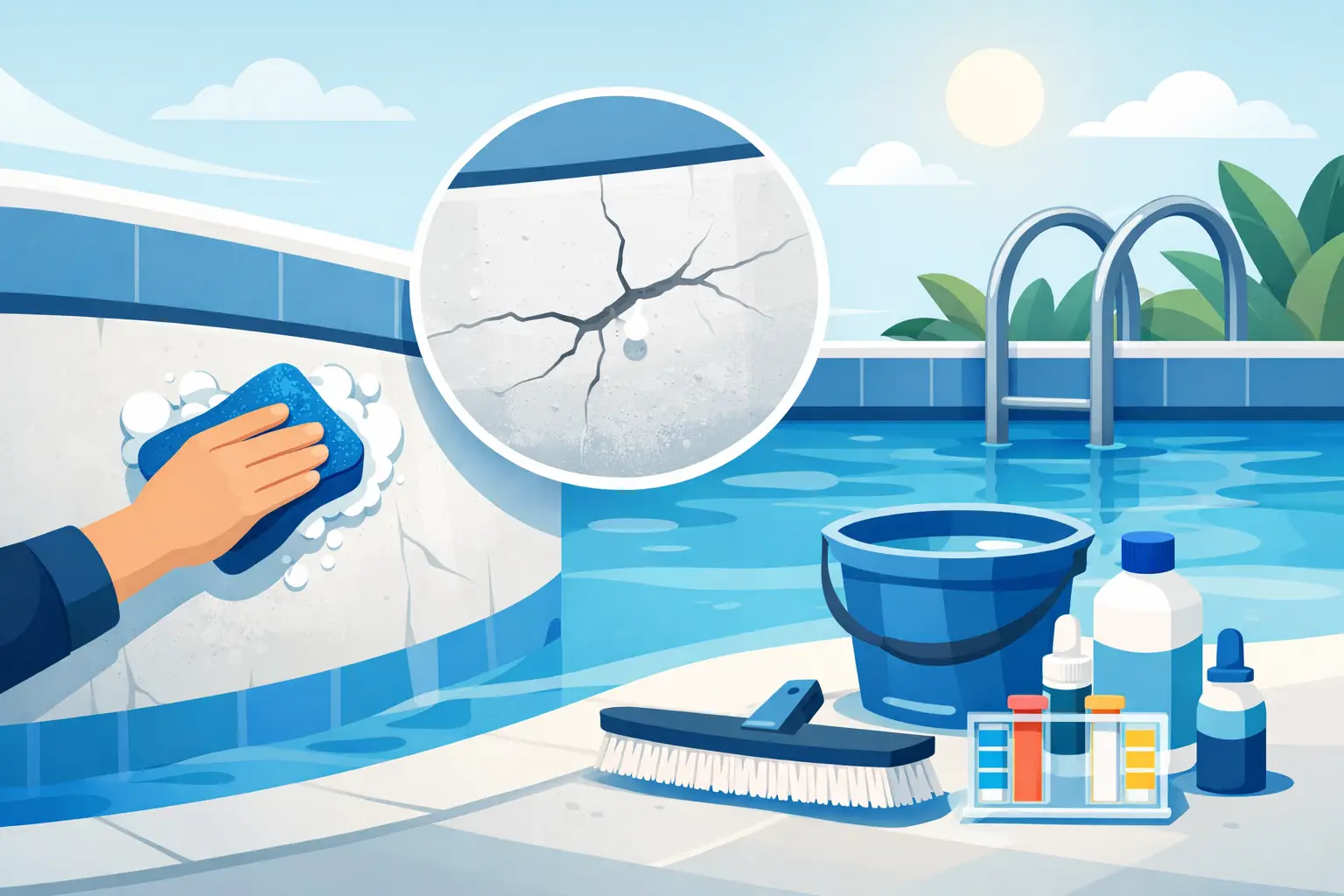
A plaster pool should look calm, clean, and inviting – not cloudy, rough underfoot, or marked with white scale and dark stains. Knowing how to maintain pool plaster protects the finish that gives a residential pool its polished appearance. It also helps avoid premature resurfacing, which can turn a manageable care routine into a major backyard expense.
Pool plaster is durable, but it is not maintenance-free. It is a cement-based surface that responds to the water touching it every day. Poor chemistry, debris, metal, aggressive brushing, and neglected equipment can all change its color and texture over time. The goal is simple: keep the water balanced, keep the surface clean, and correct small issues before they become permanent.
How to Maintain Pool Plaster With Balanced Water
Water chemistry has the greatest effect on plaster longevity. Water that is too acidic can slowly etch the surface, making it feel rough and exposing the aggregate beneath the finish. Water that is oversaturated with calcium can leave scale, especially along the tile line, steps, and areas with lower circulation.
Test the water at least once a week during swim season. In periods of heavy use, storms, extreme heat, or frequent rain, test more often. Pay attention to pH, total alkalinity, calcium hardness, sanitizer level, and cyanuric acid. These readings work together, so correcting one number without considering the others can create a new problem.
For most plaster pools, pH is best kept in the mid-7 range. Allowing pH to stay high for long stretches encourages calcium scale. Letting it fall too low makes the water more aggressive toward plaster and metal components. Total alkalinity helps prevent fast pH swings, while calcium hardness needs to suit both the pool finish and the makeup of the local water supply.
The right targets can vary by pool, climate, sanitizer system, and fill water. A homeowner using a saltwater chlorine generator, for example, may see pH rise more consistently and need more frequent adjustments. Hard-water areas call for added attention to calcium buildup. If test results repeatedly drift out of range, the issue may be circulation, chemical dosing, equipment settings, or source water rather than a single missed treatment.
Avoid adding large amounts of chemicals directly into one spot of the pool. Pre-dissolve products when their label calls for it, add them with the pump running, and brush the area afterward. Granular chemicals that sit on plaster can bleach, stain, or etch the surface.
Brush the Surface Before Dirt Becomes a Stain
Brushing is one of the simplest ways to protect plaster, and it is often skipped. Fine debris, algae spores, pollen, and chemical residue can settle into corners and along the floor even when the water looks clear. Regular brushing improves circulation at the surface and prevents buildup from taking hold.
Use a pool brush designed for plaster. Nylon bristles are the safe choice for most plaster finishes. Brush walls from the waterline down toward the main drain, then move across benches, steps, ledges, and the floor. Give extra attention to shaded areas, behind ladders, around returns, and spots where leaves tend to collect.
A weekly brushing routine works well for an established pool under normal use. Brush two or three times per week when pollen is heavy, swimmers are using the pool often, or algae has appeared. If the pool has a new plaster finish, follow the builder’s startup instructions closely. New plaster generally requires daily brushing for an initial period because plaster dust is part of the curing process.
Do not use a wire brush on standard white plaster or colored plaster. It can scar the finish and create a rough appearance. A pumice stone may help with a very small, isolated calcium deposit, but it should be used carefully and only when appropriate for the finish. Over-scrubbing can do more harm than the stain itself.
Keep Circulation and Filtration Consistent
Still water is hard on plaster. Weak circulation allows debris and chemicals to settle, which can lead to staining, discoloration, and algae growth. Run the pump long enough each day to keep water moving through the entire pool, not just the area closest to the return jets.
The ideal run time depends on pool size, pump speed, bather load, weather, and equipment design. Variable-speed pumps often make it practical to run longer at a lower speed, which supports steady filtration without the energy use of operating at maximum speed all day. A pool professional can help set a schedule that matches the system rather than relying on a one-size-fits-all number.
Empty skimmer and pump baskets regularly, especially after wind or storms. Clean or backwash the filter according to the manufacturer’s guidance and the pressure reading on the system. A dirty filter reduces circulation and leaves fine debris in the water, where it can settle onto plaster and dull the finish.
Also check that return jets are aimed to create a gentle circular flow. Dead spots on steps, tanning ledges, and deep-end corners deserve occasional manual brushing because water movement alone may not reach them well.
Remove Organic Debris Promptly
Leaves, berries, acorns, fertilizer, and soil can stain plaster if they sit too long. The risk increases when debris collects in a corner or rests on a step where circulation is low. Skim the surface often and vacuum the pool when debris reaches the floor.
After a storm, remove organic material before treating the water. Then test the chemistry, because rain can dilute sanitizer and shift pH and alkalinity. If the water turns cloudy or develops a green tint, address it early. Waiting for visible algae to spread usually means more brushing, more chemicals, and a greater chance of surface staining.
Metal stains need a different response than leaf stains. Copper, iron, and manganese can enter through fill water, certain algaecides, corroding equipment, or metal objects left in the pool. These stains may appear as blue-green, rust-colored, brown, or black marks. Do not assume every stain needs aggressive brushing or acid. Identifying the cause first prevents damage to the plaster and keeps the stain from returning.
Watch for Scale, Etching, and Early Surface Changes
Pool plaster naturally changes as it ages, but some changes are signals to act. White, crusty deposits are usually calcium scale. Roughness can point to scale or etching, depending on the water balance and appearance. Small gray areas, mottling, or faded spots may be cosmetic, but they can also reflect chemical imbalance, uneven curing, or localized staining.
Scale is easier to manage when it is thin. Correct the water balance, brush consistently, and seek professional guidance before using an acid treatment. Acid washing can brighten a surface in limited situations, but it removes a thin layer of plaster. Repeated acid washes shorten the life of the finish and should never be treated as routine maintenance.
Etching cannot be brushed away. Once plaster has been dissolved or worn down, the surface may remain rough and more likely to hold dirt and algae. The best protection is preventive: stable chemistry, proper calcium balance, and avoiding careless chemical application.
Small cracks should also be evaluated rather than ignored. Some are superficial shrinkage cracks, while others may indicate movement or a more significant shell issue. If a crack widens, catches a fingernail, leaks, or appears alongside tile movement, schedule an inspection.
A Simple Weekly Pool Plaster Routine
A dependable routine does not need to be complicated. Each week, test and adjust water chemistry, skim debris, empty baskets, brush the plaster, and inspect the waterline, steps, and floor for new stains or rough spots. Vacuum as needed and check filter pressure or flow.
Once a month, take a closer look at equipment and circulation patterns. Confirm that jets are moving water effectively, examine the filter, and look for early scale around tile, fittings, and spillways. This short check can catch problems before they affect the finish.
If the pool is unused during cooler months, do not stop caring for the plaster. Lower water temperatures may slow algae growth, but rain, debris, and unbalanced water can still damage the surface. Reduce the routine if conditions allow, but continue testing, circulation, and cleanup.
A pool finish lasts best when care is steady rather than reactive. Keep the water comfortable, keep the surface clean, and call for help when a stain, rough patch, or chemistry issue does not respond to normal maintenance. That attention preserves the quiet luxury a backyard pool is meant to provide – a place that is ready when the afternoon finally opens up.