
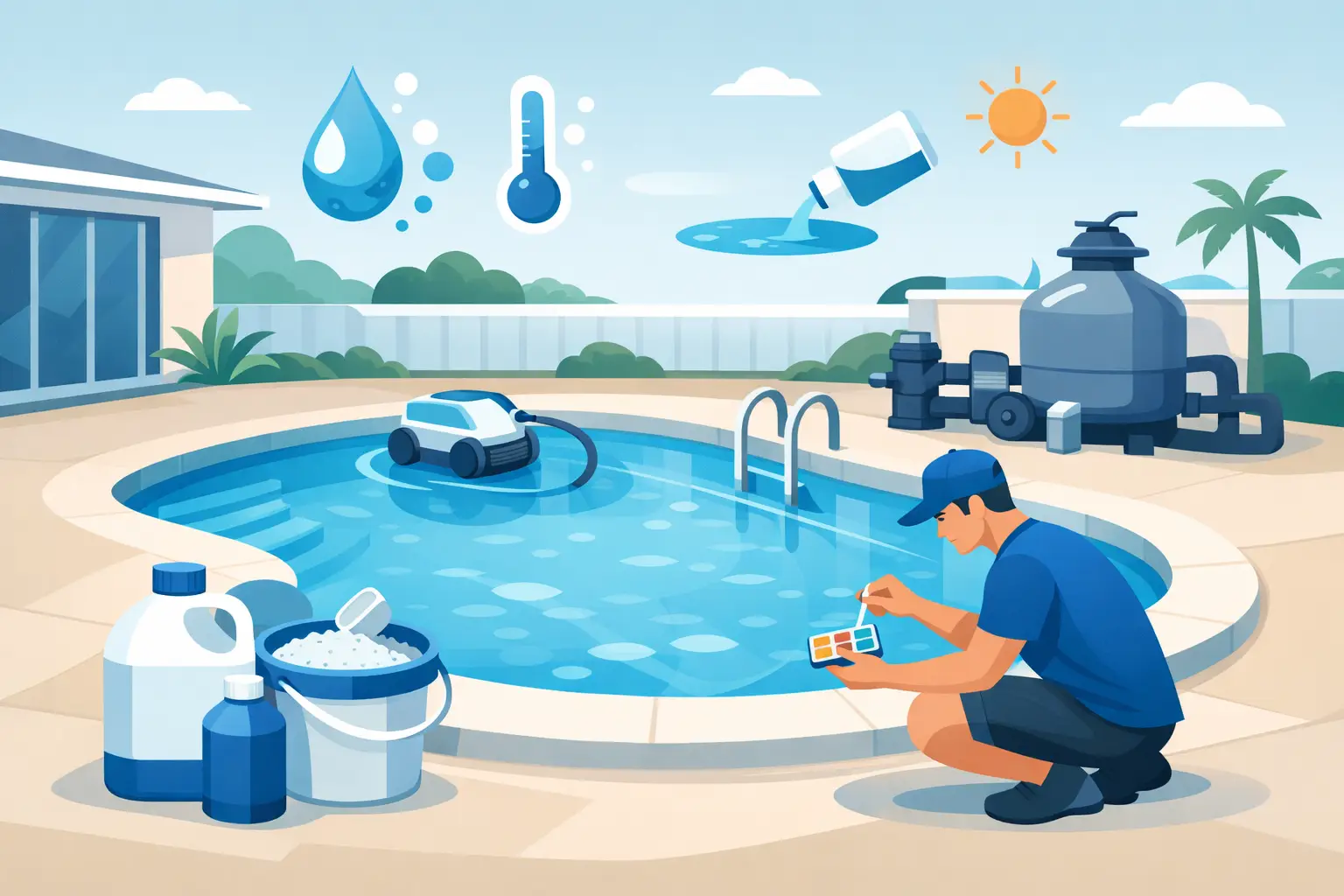
The first clear, blue fill is not the finish line. A pool startup after new installation is the controlled handoff from construction to ownership, when water chemistry, circulation, equipment settings, and the pool surface begin working together. The decisions made during these first days can affect how your pool looks, feels, and performs for years.
A new backyard pool should feel like the beginning of easier weekends, family time, and a place to cool off without leaving home. It also needs a deliberate start. Fresh water is not automatically balanced water, and new equipment should not be left to run on guesswork.
What Happens During a Pool Startup After New Installation
Startup begins when the pool is filled to the proper level and the equipment can safely circulate water. The process includes inspecting the system, establishing water balance, sanitizing the water, confirming circulation, and setting the equipment for the pool’s specific needs.
The exact sequence depends on the pool type. A plaster, pebble, or other cement-based finish requires more attentive early chemistry and brushing than a fiberglass shell. A vinyl-liner pool has different surface concerns. Saltwater systems, heaters, automation, water features, and attached spas also change the setup. The goal is not to follow a generic chemical recipe. It is to create stable conditions for the pool you actually own.
At startup, the equipment pad deserves as much attention as the water. Pumps should prime properly. Valves should be set for the intended circulation path. Filters need correct pressure readings, and returns should move water across the pool rather than leaving quiet corners where debris can settle. If the project includes a heater, cleaner, lights, automation, or a salt chlorine generator, each component should be checked before regular use.
The Water Needs Time to Settle
A newly filled pool can look perfect while still needing adjustment. Source water varies from one property to the next. It may contain metals, dissolved minerals, or a starting pH and alkalinity that do not suit the new pool finish or equipment. Construction dust, rain, leaves, and normal debris can also affect the water during the first week.
Water balance is about protecting more than swimmer comfort. Proper pH, alkalinity, sanitizer, calcium hardness, and stabilizer levels help prevent corrosion, scale, cloudy water, and surface issues. Those levels influence one another, so adding products without current test results often creates a second problem while trying to solve the first.
A professional startup typically involves repeated testing and measured corrections rather than one large treatment. This is especially true for a new plaster or pebble surface. Fresh cement-based finishes continue curing after the pool is filled. Water that is too aggressive can etch the surface, while water that is prone to scaling can leave roughness or visible deposits. Consistent early care supports an even, durable finish.
Do not assume that a saltwater pool can begin producing chlorine immediately. Salt systems often require the water to be balanced first, and the proper salt level must be confirmed before the generator is turned on. The installation instructions for the specific equipment matter here. Adding salt too soon, or adding more than the system needs, is an avoidable expense.
Why Brushing Matters for New Surfaces
For plaster and pebble pools, brushing is one of the most practical parts of startup care. It removes surface dust created during curing and helps prevent it from settling into streaks or patches. The brushing schedule should follow the finish manufacturer’s requirements and the builder’s startup plan.
It can feel repetitive in the first weeks, but this is short-term care for a long-term surface. Brush walls, steps, benches, tanning ledges, and tight transitions where dust tends to collect. Use a brush appropriate for the finish. A tool that is too aggressive can damage certain surfaces, while one that is too soft may not do the job on plaster.
Fiberglass and vinyl pools do not follow the same brushing routine, but they still benefit from regular debris removal and attention to circulation. Every new pool needs clean water movement and a watchful eye while the system settles in.
Circulation Is the Foundation
Your pump does more than make the water look active. Circulation carries sanitizer through the pool, brings debris to the skimmer and filter, distributes heat, and reduces stagnant areas. During the startup period, the pump may run longer than it will under normal seasonal operation.
The right runtime depends on the pool volume, pump type, plumbing layout, bather load, weather, and features. Variable-speed pumps offer useful flexibility, but lower speed is not always the correct startup setting. The system must move enough water to filter effectively and operate features as designed. Once the water is stable, the schedule can be refined for efficiency without sacrificing water quality.
Check the skimmer and pump baskets frequently during the first several weeks. Nearby landscaping, leftover construction debris, and ordinary wind can fill them quickly. A clogged basket restricts flow and makes the pump work harder. The filter also needs attention, but avoid cleaning it simply because it has collected a little material. Follow the filter type’s pressure guidance and the service professional’s recommendation.
Learn the Equipment Before You Need It
A new pool comes with a few controls that should not remain a mystery until something stops working. During the handoff, understand how to turn the pump on and off, identify the filter pressure gauge, empty baskets, adjust basic automation, and recognize normal sounds at the equipment pad.
Ask for a clear explanation of the valves and any special operating positions. If you have a spa, water feature, cleaner line, or heater, know which settings are used for each. Take photos of valve positions and equipment labels after the system is set correctly. That simple record can be useful after a storm, a power interruption, or a future service visit.
It is also wise to verify warranties, manufacturer registration requirements, and the recommended maintenance schedule. Equipment warranties can depend on proper installation, approved startup procedures, and documented care. Keeping test records and service notes is not busywork. It creates a useful history if performance changes later.
The First Month: What Owners Should Watch For
The first month is when small concerns are easiest to address. Water can shift quickly after heavy rain, intense sun, a pool party, or landscaping work near the deck. Test often enough to catch change before it becomes cloudy water or an algae problem. If you are not handling water care yourself, make sure the service schedule is frequent enough for a new pool and its finish requirements.
Watch the waterline, tile, steps, and returns for debris or unusual buildup. Look at the equipment pad for drips, air bubbles in the pump lid, or error messages on the controller. Some noise and adjustment are normal as a system begins operating, but a persistent leak, loss of prime, low flow, or repeated equipment alert deserves a prompt call to the installer or service provider.
Avoid treating the pool as fully routine until the startup period is complete. That may mean waiting before adding certain accessories, using an automatic cleaner, operating a heater extensively, or allowing heavy bather loads. The limits depend on the surface, equipment, and startup instructions. A little patience protects a major home investment.
Avoid the Most Common Startup Mistakes
The costliest startup mistakes are usually simple: skipping testing, adding chemicals based on appearance alone, running equipment too little, and delaying a call when something seems off. Clear water is reassuring, but it is not a complete measure of balance or sanitation.
Another common issue is trying to solve every water concern at once. New-pool chemistry should be adjusted in a deliberate order, with time for the water to circulate between changes. Mixing products or making large corrections without guidance can cloud the water, damage a surface, or create readings that are harder to interpret.
Finally, do not let a new pool’s appearance create false confidence around safety. Confirm that barriers, gates, alarms, drain covers, electrical components, and lighting are functioning as required. A beautiful backyard is better when it is ready for guests and protected for everyday use.
The best startup plan is calm and consistent: circulate, test, brush where required, keep debris moving out, and address questions early. Once those first weeks are handled well, the pool can settle into what it was built to be – a dependable part of home life, ready when the day calls for a quiet float or a full backyard gathering.