A pool can look perfect on day one and still become the wrong choice ten years later. That is why fiberglass vs gunite pool durability matters so much for homeowners who want a backyard upgrade that still feels like a smart investment after seasons of use, weather shifts, and routine maintenance.
Durability is not just about whether a pool survives. It is about how the shell handles ground movement, how often the surface needs attention, how repairs show over time, and how much day-to-day care the material demands. For most homeowners, the better question is not which pool is strongest on paper. It is which one stays attractive, functional, and manageable with fewer surprises.
Fiberglass vs Gunite Pool Durability Over Time
Fiberglass and gunite are both built for long-term residential use, but they age in very different ways.
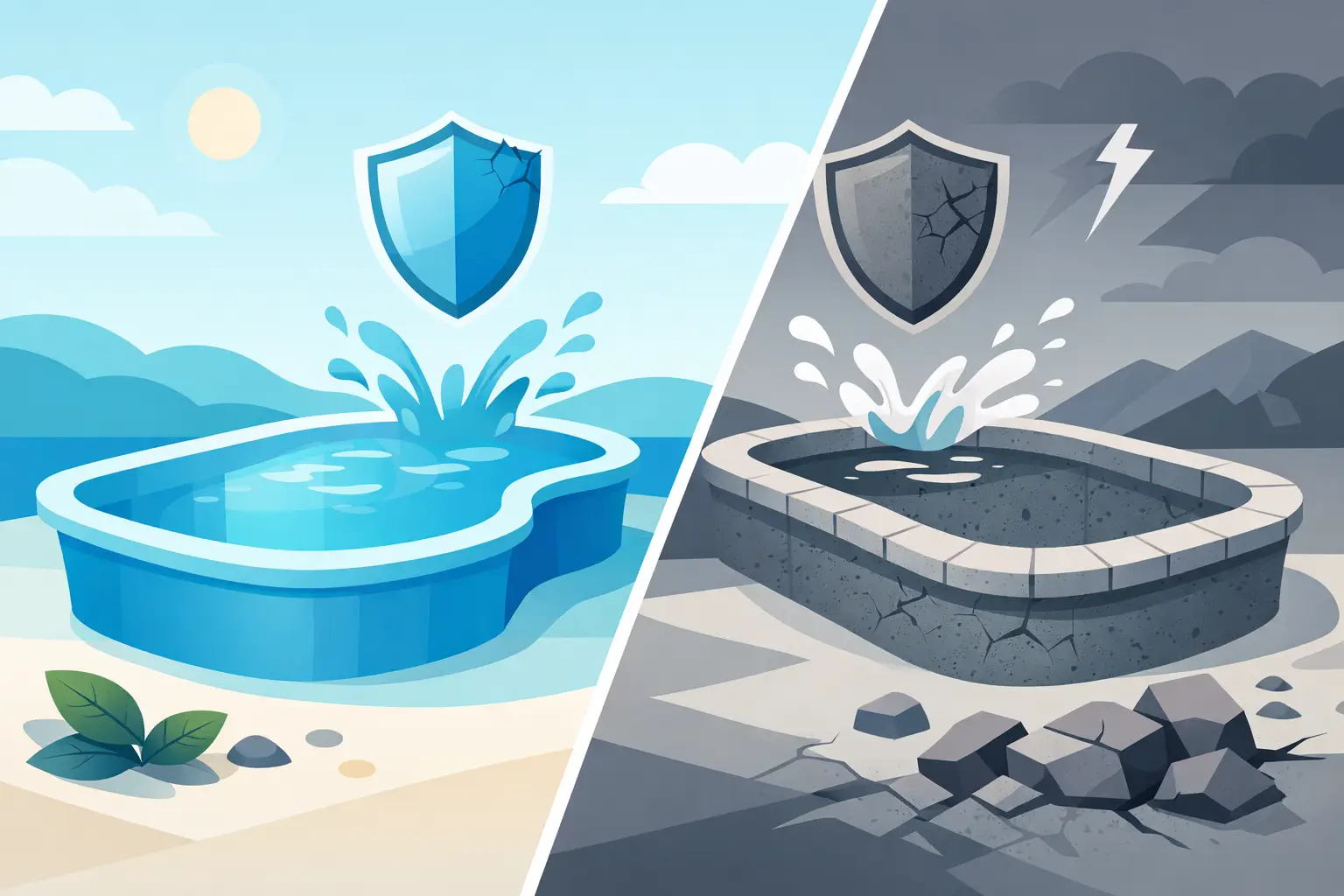
A fiberglass pool is manufactured as a single molded shell and installed into the excavation in one piece. Because that shell has some natural flexibility, it tends to handle small amounts of soil movement better than rigid concrete-based construction. In many cases, that flexibility helps reduce the chance of structural cracking. Homeowners often like fiberglass for this reason alone – fewer concerns about hairline cracks turning into larger repair conversations.
Gunite pools are built on site with a steel-reinforced concrete shell. That gives them a reputation for strength, and it also allows more freedom in shape, depth, and design. But concrete is a harder, more rigid material. Over time, soil conditions, settling, freeze-thaw cycles in some regions, and normal age can lead to surface cracks or structural issues that need evaluation. Not every crack is serious, but concrete pools generally ask for more long-term attention.
So if the durability question is strictly about resisting cracking from minor movement, fiberglass often has the edge. If the question is about a shell that can be custom-built into almost any design and still last for decades with proper care, gunite remains a durable option, just one that usually comes with more maintenance responsibility.
Surface Wear Tells the Real Story
When homeowners talk about durability, they often picture major structural failure. In reality, surface wear is what most people notice first.
Fiberglass has a smooth gelcoat finish. That surface resists algae better than rougher materials, and it is generally gentle on feet and swimwear. Over time, the finish can fade, chalk, stain, or blister in some cases, especially if water chemistry is neglected. But under normal residential care, the surface tends to stay consistent for years without the kind of regular resurfacing a concrete pool needs.
Gunite pools are finished with plaster, pebble, or quartz-based surfaces. These finishes can look excellent and feel more upscale depending on the selection, but they are wear surfaces by design. They do not last forever. Plaster can etch, stain, roughen, and discolor. Even premium finishes eventually age and need refinishing. That does not make gunite a poor choice. It just means durability includes a known cycle of cosmetic and functional surface renewal.
For many families, this is the practical dividing line. Fiberglass usually offers lower surface maintenance over time. Gunite offers more visual flexibility up front, but the finish becomes part of the long-term ownership cost.
Repairs Are Different, Not Equal
Repairs matter because every pool material can need them. The real difference is how often repairs happen, how invasive they are, and how visible they remain afterward.
Fiberglass repairs are often less frequent on the structural side, but when finish damage does occur, color matching can be tricky. A repair may be functional without becoming invisible. Chips, gouges, or isolated surface issues can usually be corrected, but cosmetic perfection is not always guaranteed, especially on older shells that have faded slightly over time.
Gunite repairs are more familiar across the industry because concrete pools have been common for decades. Crack repair, patching, tile replacement, and resurfacing are all standard services. The trade-off is that gunite often needs those services sooner or more often. A concrete pool can absolutely be restored and kept in service for a long time, but durability in this category often means being ready to maintain and refinish rather than expecting a lower-intervention ownership experience.
How Water Chemistry Affects Durability
Pool material and maintenance are tied together. A durable shell can still wear prematurely if chemistry is ignored.
Fiberglass is less reactive than cementitious surfaces, so it tends to be more forgiving. It does not demand the same level of chemical contribution from the water, and it is less likely to develop the rough, etched feel that can happen on plaster. That usually translates into easier water balance and less surface stress over time.
Gunite pools require tighter chemistry discipline. Because plaster and similar finishes interact with the water, poorly managed chemistry can speed up etching, scaling, staining, and surface breakdown. A gunite pool can be very durable, but it rewards owners who stay consistent with testing, brushing, and long-term care planning.
That is one reason some homeowners feel gunite is more demanding even when they love the custom result. The pool itself is not weak. It simply asks more from the owner to preserve its finish and appearance.
Climate, Soil, and Installation Quality
Durability is never only about material. Site conditions and workmanship shape the outcome just as much.
A properly installed fiberglass shell can perform extremely well, but poor backfill, drainage mistakes, or incorrect setting can create problems that are blamed on the material. The same is true for gunite. A concrete shell built with weak engineering, poor curing practices, or bad site prep may develop issues long before a well-built one would.
Soil movement matters. Expansive soils, high water tables, and shifting ground conditions can challenge any pool. Fiberglass often handles moderate movement better because of its flexibility. Gunite depends more heavily on correct engineering and reinforcement to resist those pressures. In either case, durability improves when the builder understands local ground conditions and plans for them from the beginning.
This is where a service-led company earns trust. The shell choice matters, but so does the quality of excavation, drainage planning, equipment layout, and post-install care. Coastal Cove Pools works in that real-world space where durability is not a brochure claim. It is the result of decisions made before the first swim.
Which Pool Holds Up Better Long Term?
If your definition of durability is fewer cracks, less surface wear management, and lower routine upkeep, fiberglass usually comes out ahead. It is a strong fit for homeowners who want a clean, polished backyard pool experience without taking on as much long-term finish maintenance.
If your definition of durability includes design freedom, deeper customization, and a structure that can be refinished and renewed over decades, gunite still makes sense. It can last a very long time, but it is a more hands-on ownership path. You are not just maintaining water and equipment. You are also preserving a concrete surface system that naturally ages.
That means the better choice depends on how you plan to live with the pool.
A busy family that wants predictable care and a smooth surface may see fiberglass as the more durable option in practical terms. A homeowner focused on a one-of-a-kind design, tanning ledges, integrated features, or a specific architectural look may accept gunite’s extra upkeep as part of the package.
The Cost of Durability
It is worth being direct here. Durability affects cost, but not always in the way people expect.
Fiberglass may reduce long-term maintenance costs because it usually avoids resurfacing cycles and often needs less chemical correction related to the shell surface. Gunite may justify its higher maintenance profile through design flexibility and a premium custom appearance, but owners should expect periodic finish work as part of the lifecycle.
So the most durable pool is not always the one with the hardest shell. It is often the one that fits the owner’s budget, expectations, and willingness to maintain it properly.
Choosing between fiberglass and gunite is really choosing the kind of ownership experience you want after installation is complete. The best pool is the one that still feels easy to enjoy years from now, on an ordinary Saturday, when the water is clear, the surface still looks right, and your backyard still feels like the place you wanted it to be.