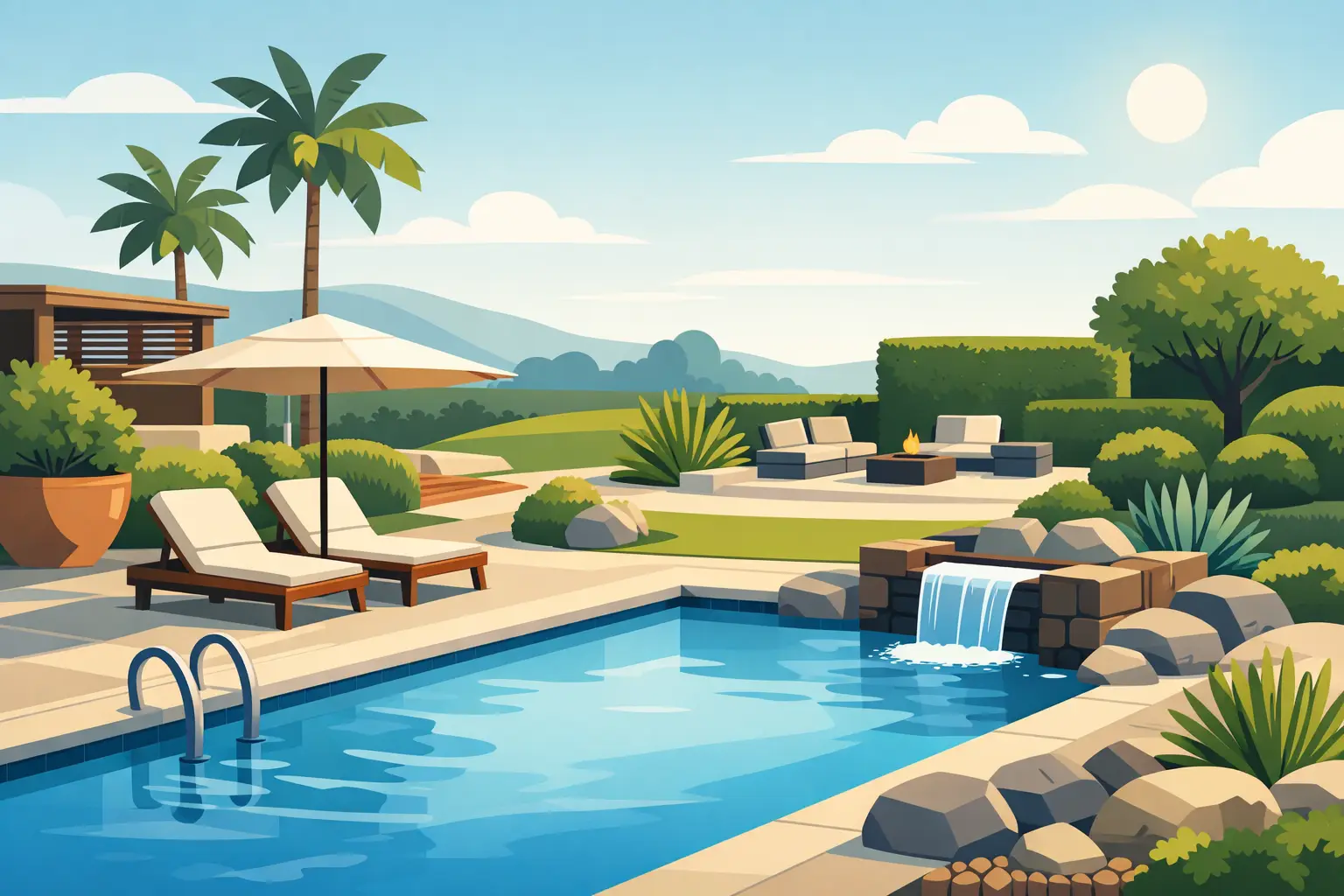
A pool can look finished on installation day and still feel incomplete once you start living with it. That gap usually comes down to the surrounding space. The best pool landscaping ideas do more than make the yard look better – they shape how the pool gets used, how much maintenance it needs, and whether the space feels calm or crowded.
For most homeowners, the goal is not a dramatic showpiece. It is a backyard that feels polished, comfortable, and easy to own. That means choosing landscaping that fits the pool style, the size of the lot, the sun exposure, and the amount of upkeep you actually want to handle.
Pool landscaping ideas that start with the layout
Before picking plants or hardscape finishes, start with how people move through the space. A pool area needs clear paths, visual balance, and enough open deck to function. If the landscaping gets too close to the waterline or blocks circulation, even beautiful design choices can feel inconvenient fast.
A simple way to think about it is in zones. Keep the pool edge clean and open. Use nearby areas for seating, shade, or planting beds. Let the far edges of the yard handle privacy screening, larger shrubs, or decorative accents. This creates a more resort-like feel because the space has order.
That layout-first approach also helps with maintenance. Plants that drop heavily into the pool, beds that wash mulch onto the deck, or decorative stone that scatters into the water all create problems that show up every week, not just once.
1. Use layered planting instead of one flat border
A row of identical shrubs around a pool can look stiff. Layered planting tends to feel more natural and more high-end. That usually means a taller backdrop, mid-height structure, and lower ground-level softness near the front of the bed.
The trick is restraint. Around a pool, too many species can make the yard feel busy. A tighter plant palette often looks cleaner and is easier to maintain. Think in terms of texture and shape, not just flower color.
This is especially useful if your pool deck has a lot of hard surfaces. Layered greenery softens the edges without taking over the space.
2. Build privacy where it matters most
Privacy is one of the most practical pool landscaping ideas because it changes how often people use the yard. If the pool feels exposed to neighboring windows or a street, homeowners tend to enjoy it less, even if the pool itself is beautiful.
Privacy does not always require a solid wall of hedge. In some yards, a combination of selective screening and strategic placement works better. A few taller plantings near lounge areas, a small tree off one corner, or a planted edge behind a raised feature can create enough enclosure without making the yard feel boxed in.
It depends on lot size. In a smaller yard, oversized screening can make the pool area feel cramped and can limit airflow. In a larger yard, not enough vertical landscaping can leave the whole space feeling unfinished.
3. Choose low-litter plants near the water
This is one of the decisions homeowners appreciate most six months later. Some plants look great on day one but shed constantly. Leaves, blossoms, seed pods, berries, and needles all end up in the skimmer or on the pool floor.
Near the pool, cleaner plant choices usually outperform delicate or messy ones. That does not mean the landscaping has to look plain. It means being selective about what goes closest to the water and saving more seasonal or high-drop plants for farther parts of the yard.
It is also smart to think about roots. Aggressive root systems can create long-term issues near decking, coping, or underground lines. A plant that looks manageable today may not stay that way.
4. Mix hardscape with planting beds
A fully planted perimeter is not always the best answer. Sometimes the strongest design comes from alternating green space with gravel bands, stepping pads, decorative walls, or clean hardscape transitions.
This matters most in modern or geometric pool designs, where too much soft landscaping can compete with the lines of the pool. A balance of materials usually feels more intentional. It also reduces the amount of irrigation and trimming required right at the pool edge.
Hardscape can also solve practical problems. If there is a high-traffic path from the house to the pool, or from the pool to an outdoor kitchen, that route should feel stable and dry. Landscaping should support that function, not interrupt it.
5. Add shade without overwhelming the pool
A pool area needs sun, but not all day and not everywhere. One of the most effective pool landscaping ideas is to create shade at the edges where people sit, rest, or watch kids swim.
This can come from trees, planted pergola zones, or larger landscape features positioned just off the main deck. The key is placement. Too much shade directly over the pool can affect water temperature, increase debris, and change the look of the water. Too little shade on the deck can make the area uncomfortable in peak summer.
There is a trade-off here. Trees give natural shade and a mature look, but some varieties bring root concerns or dropping debris. Built shade structures are cleaner and more predictable, but they can feel harsher if not softened with surrounding planting.
6. Keep the view from the house in mind
Many pool decisions get made while standing outside, but the view from inside matters just as much. In many homes, the pool is visible from the kitchen, living room, or primary suite. Landscaping should frame that view rather than block it.
That usually means keeping the center sightline more open and placing heavier planting toward the sides. Symmetry can work well here, but it is not required. What matters is visual control. The yard should look composed from both inside and outside.
A good landscape plan also gives the pool presence in cooler months, when nobody is swimming but the backyard still needs to look finished.
7. Use lighting as part of the landscape plan
Landscaping around a pool should not disappear after sunset. Soft lighting in planting beds, along pathways, and around key vertical features can make the whole yard feel more complete.
This is less about brightness and more about placement. Low, warm lighting tends to work best. It highlights structure, improves safety, and extends the time people want to spend outside.
If the pool has clean lines and upscale finishes, landscape lighting helps carry that feeling across the whole yard. Without it, the pool can end up looking isolated at night.
8. Let drainage shape the design
Not every attractive landscape plan works in real conditions. Around pools, drainage matters more than many homeowners expect. Water needs somewhere to go after rain, splash-out, or routine cleaning.
Beds that sit too high can wash onto the deck. Mulch can drift into the pool. Low spots can hold water and damage planting. Even the best materials will underperform if runoff was ignored.
This is where professional planning often saves money. Good drainage is not flashy, but it protects the deck, keeps the area cleaner, and helps the entire project age better.
9. Soften fences and boundaries
Most pool areas need fencing, but fencing rarely improves the look of a yard on its own. Landscaping can help it recede or turn it into part of the design.
Climbing material, hedge lines, narrow planting beds, or repeated vertical accents can break up a long fence run. The goal is not to hide every boundary. It is to keep the perimeter from feeling hard and abrupt.
This works especially well in suburban yards where lot lines are close. A softened edge can make the entire pool area feel more private and more refined without increasing visual clutter.
10. Match the landscape style to the pool style
A freeform pool and a sharp, contemporary planting scheme can work together, but they need a clear reason. In most cases, the cleanest result comes from aligning the landscape style with the architecture of the pool and home.
Tropical-style planting can create a relaxed vacation feel. Structured evergreens and ornamental grasses can support a modern layout. Native or regionally adapted planting can feel natural and lower-maintenance. None of these is automatically right. The best fit depends on the house, the neighborhood, and how formal you want the space to feel.
This is where many projects lose cohesion. Homeowners pick attractive individual elements, but the full yard ends up feeling disconnected. A more focused design always looks stronger.
11. Leave room for living
The most common landscaping mistake around pools is using too much of it. Homeowners often underestimate how much open space they will want once the pool is in use.
Deck area matters for chairs, towels, foot traffic, and entertaining. Kids need room to move. Adults need places to sit that do not feel jammed into planting beds. If every edge is filled, the yard can feel smaller and more high-maintenance than it should.
Good landscaping supports the experience of the pool. It should not compete with it.
How to choose the right pool landscaping ideas for your yard
The right plan usually comes down to four things: lot size, sun, privacy, and upkeep. If your yard is compact, be selective and avoid oversized planting. If the space gets intense afternoon sun, build in shade where people actually gather. If privacy is limited, screen views without closing off the entire yard. And if you do not want constant trimming, skimming, and seasonal replacement, keep the plant palette simple.
Coastal Cove Pools sees this often with residential backyards – the best-looking spaces are rarely the ones with the most features. They are the ones where every choice has a job.
A strong pool landscape should feel easy the moment you step outside. Not empty. Not crowded. Just well placed, comfortable, and ready to use. If you plan for that feeling first, the rest of the design gets much simpler.